Collecting Weekly airs its 2025 interview with Brandon Best and Josh Johnson on Wednesday. Nine things to listen for, and what the record already says about each.
The premiere is Wednesday, October 14, 2026, at 8 a.m. MDT (10 a.m. EDT), under the title “Things Have Changed.” Collecting Weekly calls it “an approximately 75-minute interview” conducted in 2025 with the two men who took over the Keizer store, and writes that some statements “conflict with information that has come to light since.” Collecting Weekly’s own email to BAM’s corporate office in April 2025 is the one public account of what they told the show: their “main assertion was that no marked sets were present at the time of their takeover.” Most of what answers it came later, from their own side. BAM’s complaint calls Best “BAM’s representative, Brandon” on the night the store was taken, and Johnson wrote in December 2025, “We have been holding on to what had stickers on them.” It is also the first long account in Best’s own voice to reach the public record, and it was recorded before nearly everything below existed.
AS REPORTEDCollecting Weekly’s listing for the October 14, 2026 premiere, and Collecting Weekly’s April 2025 emails with BAM’s corporate office, as the show posted them with the corporate writer’s name blacked out.
PRIMARY SOURCEThe consignment agreement and BAM’s filed ledger; BAM’s verified complaint; the published Keizer police file; BAM’s marked disclosure documents and its August 2026 FAQ; the September 2026 call and the consignor’s September 26, 2026 stream, as their makers published them.
CONFIRMEDTheir roles and every date: BAM’s disclosure documents, balance sheets and posts, the Oregon Secretary of State, and the dockets of both cases. The rules of evidence and the code sections are cited as law, not as findings.
The premiere
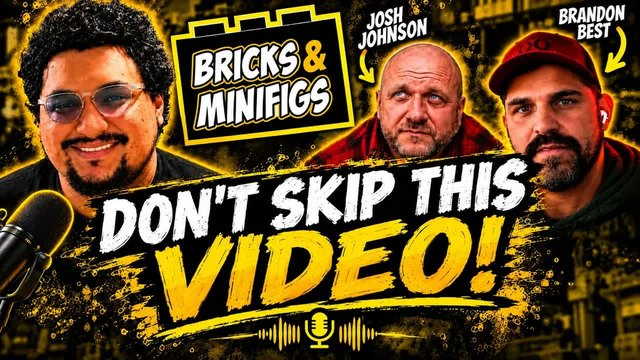
Some statements made during the interview conflict with information that has come to light since, while other comments provide important context for understanding what was being said at the time.
This is the original conversation from 2025, presented so you can hear their answers for yourself and consider them in the context of what was known then versus what we know now.
The listing links a public Google Drive folder titled “Bryan Mansell”: the contracts and inventory, the store’s own ads for the collection, the Ring footage, photographs of the marked sets from the night of the takeover, and Collecting Weekly’s April 2025 emails with BAM’s corporate office. It also links ACOB’s uncut interview with BAM’s chief operating officer, Matthew McNeff, posted May 29, 2026.
In those emails, corporate’s first answer, on April 14, 2025, was “Unfortunately we are not authorized to share that information,” followed the same afternoon by a form reply on how stores “offer fair values for LEGO products.” On April 15, 2025, it sent its statement: “As policy states, Bricks & Minifigs does not enter into consignment agreements.” On April 30, 2025, it warned that any further public “misrepresentation of this situation” would “be considered defamatory.” Collecting Weekly wrote back the same day; by then, by its own account in that email, the show had spoken with both men:
Additionally, we would like to note that when speaking with Brandon and Josh (the current store owners), their main assertion was that no marked sets were present at the time of their takeover and that nothing was identified as belonging to the prior consignor.
However, we have dated and timestamped photographs from the day of the ownership transition that show clearly marked sets (yellow sticker behind the price tag) present in the store.
Who is speaking
BAM’s own complaint describes the two men two ways. It calls Best “BAM’s representative, Brandon,” who conducted “an informal and video inventory” of the store the night it was taken (¶ 29), and says he was “engaged as a contracted inventory inspector for BAM” (¶ 41). It also calls the buyers “bona fide third-party purchasers” who “began operating as an independent authorized franchisee of BAM” (¶ 47). The morning after the takeover, Salem-Baker Bricks Inc was e-filed at the store’s address, with Best as incorporator and president. BAM’s 2026 disclosure document lists him as operator of both Oregon stores; at those two addresses the registry now shows newer LLCs, BAMFSALEM LLC, managed by Matthew McNeff, and Willamette Forest Ops LLC, whose members are Matthew McNeff and BAM Franchising, and neither names Best.
Johnson is among the franchise sellers in BAM’s disclosure documents from 2024 through 2026, and the edition BAM amended in September 2026 still lists him. To an American Fork officer in March 2026: “I work at the corporate headquarters as well.” In June 2026 BAM posted a notice titled “Bricks & Minifigs Parts Ways with… Brandon Best and Joshua Johnson” (reported July 11, 2026); both remain named plaintiffs in BAM Franchising, Inc. v. Schneider, beside BAM, Ammon and Matthew McNeff, and a Utah company called Baker Bricks LLC, and Johnson verified the complaint.
What the law asks
Conversion is Oregon’s name for exercising dominion over another’s chattel seriously enough that the actor must pay its full value: Mustola v. Toddy, 253 Or. 658 (1969), adopting Restatement (Second) of Torts §222A. Good faith is not a defense to it, no one passes title they do not have, and refusal on demand is its classic marker. The questions, and what the record already holds on each:
| What the law asks | What the record already holds |
|---|---|
| Whose goods were they? | The consignment agreement’s title clause, signed the year before the seizure: “Consigned merchandise shall remain the property of Mansell until sold.” |
| Who took control of them? | BAM’s complaint: on November 14, 2024, BAM “assumed possession of the premises and all assets located within the store” (¶ 40). On the store’s Ring camera at 7:10 p.m. PST that night, in the police file’s transcription, BAM’s Director of Operations, Ki McAllister (identified on page 22): “Brandon is taking on the business and takes on all that consignment.” |
| Did they hold the goods and set the terms of their return? | Johnson’s texts, December 2025: “We have been holding on to what had stickers on them. We put them in the back.” The terms: “a signed document from our legal team,” an agreement to “take down all negative comments,” and a “Formal apology.” Then: “Do you want it? Yes or no?” |
| Was there a demand, and a refusal? | May 2025, to police: because Mansell kept calling the store, Johnson “does not want to give these items to Mr. Mansell,” and “doesn’t feel he needs to, since the store’s inventory became his once he took it over.” On recorded calls summarized in the file, return once the family first wins a judgment, and “he has 10 to 15 sets sitting there.” |
Nine things to listen for
| Listen for | What the record already holds |
|---|---|
| 1. Who they say they were on November 14, 2024. | The complaint: “BAM’s representative, Brandon” (¶ 29); “a contracted inventory inspector for BAM” (¶ 41). Salem-Baker Bricks Inc, e-filed at the store’s address the next morning. Best, to police in May 2025, as the file’s review records it: there had been “another manager until the end of March, when he took over,” and “corporate seized everything.” Johnson, to an officer in 2026: “I work at the corporate headquarters as well.” |
| 2. When they say they learned of the consignment. | Hour zero, on BAM’s own director’s word: “Brandon is taking on the business and takes on all that consignment.” The detective’s written conclusion, March 5, 2026: the company and its operators “were informed of and aware.” |
| 3. What they say about the marks on the sets. | Two former employees told the detective the stickered sets were in the store after the takeover, one that “some of the yellow stickers were removed from sets” and that “this occurred immediately after Best took over operations.” Johnson’s texts, December 2025: “We have been holding on to what had stickers on them.” Best, February 2026: “did not observe any obvious markings, stickers, or tags.” The complaint: sets found “In late 2025” with “stickers not previously recognized” (¶ 82). The boxes BAM sent back: “No yellow dots.” “Some of them even have residue where the yellow stickers were.” |
| 4. Whether they say any of his sets remained. | May 2025, to police: a few items matching his description set aside. December 2025: “We put them in the back.” The complaint: “approximately 20” sets in “a back office lockable cupboard” (¶ 82). Johnson, September 2026: “there was those sets that were left in the store that I was personally responsible for.” Under the September 2026 settlement, about 35 sets came back, seven of them never his; BAM’s own register marks 403 of his copies still unsold the night it took the store. |
| 5. Whether they say the company takes consignments. | The franchise agreement BAM filed in court lists “consignment services” among a store’s approved services. Since at least 2014 the disclosure document told buyers a franchisee “may also offer” them, until BAM struck the words on March 31, 2025, and again in 2026. Corporate to the show, April 15, 2025: “As policy states, Bricks & Minifigs does not enter into consignment agreements.” BAM’s FAQ, August 2026: “A third-party consignment has never been part of that model, the franchise agreement, or the operations manual.” |
| 6. Who they say owned the store, and when. | The complaint: Salem was “BAM’s corporate owned store at that time” (¶ 49), sold under a purchase agreement of March 27, 2025 (¶ 46) to buyers it calls “bona fide third-party purchasers” (¶ 47). BAM’s balance sheets carry “BAMF Salem - Corporate Store Costs”: $13,163.32 on March 31, 2025, and $78,081.94 on May 31, 2026. Johnson, to police in May 2025, as the file’s review records it: “the business absorbs all inventory in the store once it is taken over.” And in September 2026: “So we got Salem for free, right?” |
| 7. Whether they say they offered to give it back. | The December 2025 offer came with conditions: the signed document, the comments taken down, the apology. The complaint calls it an offer made “Purely as an accommodation (and without any legal obligation to do so)” (¶ 83). Seven months before it, to police: “does not want to give these items to Mr. Mansell.” |
| 8. How they describe the consignor. | On April 11, 2025, Best called Keizer police to report that Mansell was making threats against the store by phone and on social media; the officer recorded no direct threat, and Mansell was warned, not charged. In May 2026 BAM sued him under Utah’s racketeering law, pleading “theft by extortion” among the predicate acts (¶ 135(c)), then apologized, agreed to pay, and dropped him from the case. |
| 9. The numbers they give. | The complaint puts what remained at “less than $38,000,” with “Less than $5,000 worth of Star Wars LEGO product” in the store (¶ 29). Best, to the detective: the figure he reported to corporate that night, “approximately $17,000,” and in the same interview “approximately $32,000 in inventory.” BAM’s filed ledger, added up: the unsold Low column totals $31,339 and the High column $49,633, before its two most valuable rows. |
Why this recording matters
Seventy-five minutes is long. The two men gave it in 2025, no later than April 30, 2025 by Collecting Weekly’s own email: weeks after the purchase agreement BAM’s complaint dates to March 27, 2025, within fifteen days of corporate’s written statement to the same show, and before nearly every line in the two tables above. The first police supplement (May 6, 2025), Johnson’s texts (December 2025), the reopened review and the detective’s conclusion (February and March 2026), BAM’s suit (May 2026), the settlement (August 2026), the return (September 2026), the September 2026 call and the October 2026 filings all came afterward. What they said then is their account as it stood before any of that existed. Collecting Weekly’s own framing is “what was known then versus what we know now.”
It is also the first long account in Brandon Best’s own voice to reach the public record. Until now that record has had him in fragments: his voice on the recordings made inside the store the night it was emptied, his positions as officers paraphrased them (December 30, 2024; May 2025; February 2026), and the parts BAM’s complaint gives him (¶¶ 29, 41). Johnson has spoken at length once, 65 minutes with a YouTuber in September 2026. Wednesday has both of them, together, a year and a half earlier.
There was also nothing yet to manage. In April 2025 no one had sued anyone over the collection. The consignor had a lawyer, by corporate’s own April 30, 2025 email, and the police file held one report, from December 30, 2024, beside the store’s own harassment complaint of April 11, 2025. The reopened investigation came nine months later, the verified complaint the two men would join thirteen months later, the settlement, the apology and the return sixteen months and more. Nothing yet turned on what they said to a collectors’ show. What that did to how they spoke is for listeners to judge on Wednesday; the show’s own description is that some of it conflicts “with information that has come to light since.”
The two cases it lands in
Both men are plaintiffs in BAM Franchising, Inc. v. Schneider, before Judge David Barlow, and the complaint Johnson verified calls it a lie that BAM’s chief executive “took the LEGOs” (¶ 135(e)). The interview airs in the middle of briefing on Reckless Ben’s anti-SLAPP motion (ECF 37), whose argument is that the charge at the heart of the videos is true by BAM’s own admissions, the Ring line among them: “Such evidence and admissions establish the substantive truth of Reckless Ben’s statements … in substance, Plaintiffs admit they ‘stole’ items in the Mansells’ LEGO collection.” On October 1, 2026, the defense added Johnson’s September words by supplement (ECF 43). On October 9, 2026, BAM stipulated that it would not oppose (ECF 48), and its 28 days to answer start over when the supplemental memorandum is filed.
A 75-minute recording of both men from 2025 is the same kind of material. It speaks to the facts the complaint pleads as true: that they took the store “without actual knowledge of Bryan’s purported consignment claim” (¶ 45), that they told police they “did not knowingly possess any of his alleged property” (¶ 52), that they were “bona fide third-party purchasers” (¶ 47), and that the cupboard sets surfaced “In late 2025” (¶ 82). Under the rules set out here, a party’s own statement comes in against him (Federal Rule of Evidence 801(d)(2)(A)). Against BAM the question is agency, and BAM’s own disclosure document lists Johnson as one of its franchise sellers. Any later testimony that differs meets the recording as impeachment, and BAM’s lawyers answer under Rule 11, which reaches “later advocating” a pleading. Whether the court takes in evidence beyond the complaint, and what weight a verification given “to the best of my knowledge, information and belief” carries against it, are Judge Barlow’s to decide.
In the Gormans’ own case against BAM, BAMF Salem 1, LLC v. BAM Franchising, Inc., in Utah’s Business and Chancery Court, Best and Johnson are defendants. The amended complaint of August 14, 2026 names both McNeffs personally, adds the two men and their companies, and pleads a pattern under Utah’s Pattern of Unlawful Activity Act; its count charges BAM with seizing stores and passing them on, and the same two men formed the corporation that took The Last Relic’s Florida store on the day BAM terminated him. That case puts the Salem disposition in issue. BAM’s complaint says it credited the seized store at “an estimated $38,000 paltry value” against a $175,000 debt (¶ 27). Utah’s commercial code requires that “Every aspect of a disposition of collateral, including the method, manner, time, place, and other terms, must be commercially reasonable” (Utah Code 70A-9a-610(2)), and once the debtor puts it in issue “the secured party has the burden of establishing” that it was (70A-9a-626(1)(b)). The only prices on the public record are “whatever you recover it for,” to an officer, and “free,” on the phone. Whatever the two buyers said in 2025 about how they came to hold the store, what it held, and who ran it between November 14, 2024 and the March 27, 2025 purchase agreement goes to that question, and as defendants’ statements it needs no exception to be used against them. How far it reaches BAM is for that court.
The fair reading, and its limit. The interview is a 2025 conversation on a collectors’ show, not testimony, and Collecting Weekly writes that alongside the statements that conflict with what came out later, “other comments provide important context for understanding what was being said at the time.” Whether any of this meets the law of conversion is for a court. Corporate’s April 30, 2025 email says its own counsel was in contact with the consignor’s lawyer. Marion County’s prosecutor has twice reviewed the Keizer file and twice deemed the matter civil. Nobody named here has been charged with anything arising from the store, and everyone named is presumed innocent. The right of reply is open to both men and to BAM.
The record
Collecting Weekly’s premiere listing, set for October 14, 2026, and the “Bryan Mansell” folder it links, with “Email exchanges with corporate 2025” and “Emails with corporate through contact us form”. ACOB, May 29, 2026. The consignment agreement, Exhibit A, and BAM’s filed ledger, Exhibit B. The franchise agreement BAM filed in Clackamas County case 23CV36974. The Keizer police file (the PDF, cited above by page) and Keizer incident report KZP25005441. BAM Franchising, Inc. v. Schneider, Utah Fourth District No. 260402353, removed to D. Utah No. 2:26-cv-00593 (the verified complaint, cited above by paragraph; ECF 37; ECF 43; ECF 48). Matty AppleSeed, September 26, 2026, the 25-minute cut of the September 25, 2026 call, and the consignor’s September 26, 2026 stream. BAMF Salem 1, LLC v. BAM Franchising, Inc., Utah Business and Chancery Court No. 260200029, and its amended complaint of August 14, 2026. BAM’s marked disclosure documents for 2025 and 2026, filed with the Minnesota Department of Commerce, and its August 2026 FAQ. Mustola v. Toddy, 253 Or. 658 (1969), and Restatement (Second) of Torts §222A; Federal Rule of Evidence 801(d)(2)(A). The Oregon Secretary of State record for Salem-Baker Bricks Inc. BAM’s disclosure documents, 2024 through 2026.