Reckless Ben files anti-SLAPP motion against BAM in federal court.
BAM Franchising sued Benjamin Schneider, the creator known as Reckless Ben, in federal court over the videos he made about the company. Today, on the deadline the court had set, his lawyers moved to throw most of it out. They filed a motion under Utah’s anti-SLAPP law, the kind meant to stop a lawsuit brought to punish speech, aimed at the core of the case: the racketeering and defamation claims. If the judge dismisses them, the law makes BAM pay Schneider’s legal bill. The motion’s case, in a line, is that the charge at the heart of the videos, that BAM took the Mansell family’s LEGO, is protected opinion, is not defamatory, and is in substance true by BAM’s own admissions. BAM will respond. Judge Barlow will decide.
PRIMARY SOURCEthe motion, filed September 18 as ECF 37 in BAM Franchising, Inc. v. Schneider, No. 2:26-cv-00593 (D. Utah): a “Special Motion for Expedited Relief and for Partial Dismissal” under Utah’s Uniform Public Expression Protection Act, the state’s anti-SLAPP statute, applied through the federal rule for dismissing a claim. 7,635 words, filed by Spencer FaneCONFIRMEDthe court set the date. On September 2 it granted a stipulation tolling the anti-SLAPP deadline to September 18 (ECF 36). BAM sued Schneider and others in May and removed the case to federal court in JuneUNRESOLVEDwhat the motion wins. BAM has not responded and the judge has not ruled
“The Court should stop this quintessential SLAPP effort.”
Read it in full: Special Motion for Expedited Relief and for Partial Dismissal, ECF 37, filed September 18, 2026 (PDF, 30 pages). Every quotation in this piece is drawn from it.
The case
BAM Franchising, its owners Ammon and Matthew McNeff, and others sued Schneider, his company Reckless Ben LLC, Victor Nguyen and Bryan Mansell in May. The case moved to the U.S. District Court for the District of Utah, where it sits before Judge David Barlow as No. 2:26-cv-00593. It is the one this site has followed since the spring. Its thirteen claims are built, as the motion puts it, “primarily” on Schneider’s videos about how a Bricks & Minifigs store in Salem, Oregon handled the Mansell family’s consigned Star Wars LEGO collection. The claim against Mansell has since settled, and in August BAM asked the court to erase every claim against him. An agreed order earlier in the case lifted the restraints on Schneider’s reporting while the suit runs.
What the motion asks for
It does not try to end the whole case, only its core. It asks the judge to dismiss for good, with no chance to refile, the claims it says the anti-SLAPP law hits hardest: the racketeering count and the defamation claims around it, defamation, defamation per se, false light, civil conspiracy, intentional infliction of emotional distress and unjust enrichment. It leaves the conduct claims, for interference, stalking, nuisance and trespass, for later, and says Reckless Ben will bring his own counterclaims once this motion is decided. Then it asks the court to send BAM the bill, and it argues the law gives the judge no choice about it.
“To the extent the Court agrees and dismisses any part of the Verified Complaint, UPEPA also requires Plaintiffs to pay Reckless Ben’s attorneys’ fees and costs incurred in litigating this motion.”
Its first move: this is speech
An anti-SLAPP law lets a person sued over their speech ask the court to dismiss the case early, before the cost of defending it becomes the punishment, and to recover their fees. Utah’s version is the Uniform Public Expression Protection Act, and it runs in two steps. The first is whether the law covers the suit at all, which turns on whether the defendant was exercising free speech on a matter of public concern. The motion argues that is not a close call. Making and posting an investigation for millions of viewers is speech, and its subject, how a company with more than 130 stores treated a customer, is a matter the public cares about. The videos, it says, “did what journalism is meant to do” by drawing “attention to a piece of news.”
“Obtaining information and footage with the intent to disseminate to millions of potential viewers ... is ‘speech’ for First Amendment purposes.”
The motion leans on that case, one of two decisions from this same federal court that have applied Utah’s anti-SLAPP statute to an online creator. Reckless Ben’s first video on the story, it notes, passed a million views in under a week and now has more than 6.9 million.
Its main move: the truth defense
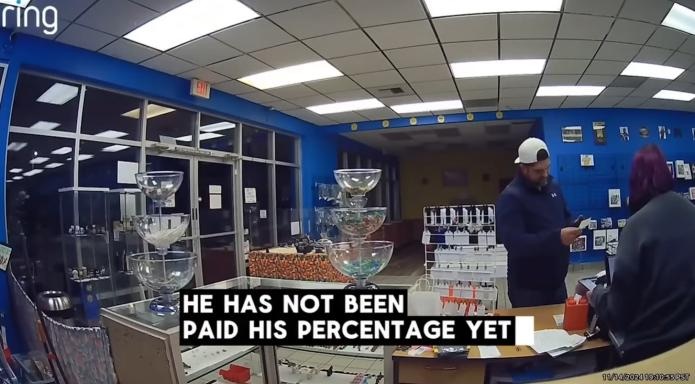
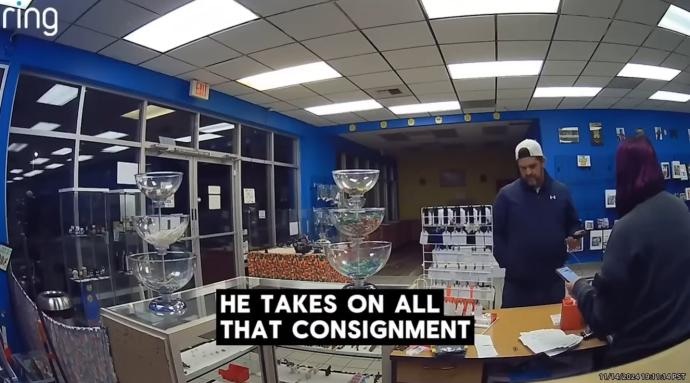
The second step is the merits, and here the motion turns BAM’s own words against it. The videos’ central charge, that BAM “stole” from the Mansells and “steals from old people,” is the kind of broad accusation courts treat as opinion or “rhetorical hyperbole,” not a provable fact, and BAM, the motion says, never pointed to one specific false statement in its complaint. Then it goes further. The charge is not just protected. It is substantially true, and truth is a complete defense. The proof it offers is a phone call BAM’s own people had, captured on the store’s Ring camera and later aired in the Coffeezilla interview BAM took part in.
Chrystal Law, the former store owner, to a BAM representative: “He [Mr. Mansell] has not been paid his percentage yet. And if I don’t have the tickets, I won’t know how much I need to pay him.”
The BAM representative: “Okay, so so Chrystal, ultimately also is that that’s a business thing and not necessarily yours. Brandon will take, and because he’s taking on the business he takes on all that consignment.”
BAM later settled with Mansell, agreed to pay for the collection, and gave the family what it called an “unqualified apology.” Its chief financial officer, pressed on camera about LEGO the inventory list did not account for, said, “Where’s the rest of it? You got me. I don’t know.” A Keizer police detective reached the same conclusion, that BAM knew. Put together, the motion argues, the company has already conceded the thing Reckless Ben said.
“Such evidence and admissions establish the substantive truth of Reckless Ben’s statements ... in substance, Plaintiffs admit they ‘stole’ items in the Mansells’ LEGO collection.”
The claims that fall with it
The defamation ruling, if it comes, takes the rest with it. The motion argues the false light, civil conspiracy and emotional distress claims all rest on the same speech, so they fail for the same reasons. It adds separate problems: a corporation cannot as a matter of law suffer emotional distress, and BAM’s unjust enrichment claim seeks profits Reckless Ben earned from his own videos, money BAM never paid him.
The racketeering count fails on its own terms, the motion argues. No genuine criminal enterprise, no pattern, and a dispute over one family’s LEGO far too short and too contained to be the years-long racket the statute was written for.
The gag order
Underneath the legal arguments the motion tells a story about how the suit was run. BAM sued, it says, and at once obtained a sweeping restraining order that stopped Reckless Ben from speaking about the story, with no chance to respond, while BAM itself kept talking. It was not the company’s first move to quiet him; it had already sent this site a cease and desist letter. The order was later softened by agreement, but the suit went on. And BAM’s own talking, the motion argues, cut against it.
“At the same time, Plaintiffs freely spoke about the situation, attempting (unsuccessfully) to convince the world they had done nothing wrong. In doing so, however, Plaintiffs directly contradicted key allegations they made in filing this suit and obtaining the TRO. While this unfolded, Reckless Ben was silenced by a TRO that operated as a gag order.”
The turn
The motion does not only defend Schneider’s speech. It argues the defamatory speech in this case is BAM’s. It points to what Ammon McNeff, BAM’s chief executive, told police on body camera, now online: he called Schneider a “sociopath,” and, citing what he said the family had “piece[d] together” about a relative who shares Schneider’s name, suggested a criminal past. The motion draws the line plainly.
“These statements, not Reckless Ben’s, are defamatory.”
The case BAM made against itself
Strip the motion to its engine and one thing drives it: Reckless Ben’s lawyers prove the truth defense almost entirely out of BAM’s own mouth. The admissions are not his characterizations. They are the company’s own people, on camera and on the record, saying the thing the suit denies. This site has kept a running census of BAM contradicting itself, and the motion’s proof sits inside it. Every line below is BAM’s own, turned against BAM.
- The consignment transferred. On the store’s Ring camera a BAM representative says the incoming owner “takes on all that consignment.”fact checkprimary source
- Yet BAM told the world it does not do consignments, and that it had no real way to know what was Mansell’s.fact checkprimary source
- The family was owed. On the same recording: “He has not been paid his percentage yet.”fact checkconfirmed
- The LEGO was there, then it was not. Ammon McNeff to the family, “You guys are holding some of our Legos? No, we’re not,” against BAM’s own chief financial officer on camera, “Where’s the rest of it? You got me.”fact checkprimary source
- The stolen-goods concession. BAM’s own operations manual warns that the buy counter must be policed so stores do not become a place to sell stolen goods.fact checkprimary source
- The defamation the motion flips. Ammon McNeff’s “sociopath” and criminal-relative statements to police, which the motion says are the actual defamation in this case.fact checkprimary source
The videos filed as evidence
The motion did not travel alone. The same day, the defense lodged a flash drive with the court carrying thirteen videos, filed as exhibits. Seven are Reckless Ben’s own. The rest belong to other people: Coffeezilla, FOX 5 Washington DC, a lawyer walking his audience through the lawsuit, and the interview BAM’s chief executive sat for. Together they are both the speech BAM sued over and a measure of how far the story travelled, which is the public-concern point the motion has to make. The notice listing them names all thirteen.
- Ex. 2 I Found The $200,000 Missing Lego · Coffeezilla
- Ex. 4 I tracked down the thief who stole $200,000 of LEGO · Reckless Ben
- Ex. 5 I got arrested because of legos · Reckless Ben
- Ex. 6 I Got Arrested Investigating a LEGO Store · Ben Schneider
- Ex. 7 Bricks and Minifigs responded to my video · Reckless Ben
- Ex. 8 My response to the Police · Reckless Ben
- Ex. 9 All the footage is released! · Reckless Ben
- Ex. 10 My final message · Reckless Ben
- Ex. 15 Bricks Minifigs CEO answers your questions! · ACOB
- Ex. 16 Bricks and Minifigs CEO (Ammon McNeff) Interviewed by Clutch Power · BAM Sucks
- Ex. 17 A franchisee went rogue · FOX 5 Washington DC
- Ex. 18 The $200,000 LEGO Scandal · Law By Mike
- Ex. 20 Ammon’s Credibility Just Got Worse in New Reckless Ben Body Cam! · The BBQ Counselor
What happens next
A motion is a request, not a ruling. BAM will file a response, Schneider a reply, and Judge Barlow will decide, on the papers or after a hearing.
The fee point raises the stakes. If the judge dismisses any part of any claim as a matter of law, the motion argues, the Act makes a fee award against BAM mandatory, not a matter of the judge’s discretion. The timing carries its own weight. The deadline landed on September 18 only because the parties had twice agreed to push it back, and it came just over two weeks after BAM sat with a mediator over an offer from Schneider’s side. A motion on that day, rather than a settlement, means the case is still live.
One question runs underneath every anti-SLAPP fight in federal court: how much of a state law like Utah’s carries into it. The motion treats the Act as applying and points to the two decisions from this same court that have used it. On the record so far, that is the stronger reading. Whether BAM contests it is for its response.
The fair counterpoint. Everything above is one side’s filing, and a motion decides nothing. BAM has not answered it and is entitled to. Its claims remain unproven allegations, and it is presumed to have brought them in good faith. The quoted recordings and admissions are presented here as the motion presents them, and BAM may read them differently in its response. Whether Utah’s anti-SLAPP law reaches this case, and how far, is unsettled, and it is for the court. This site takes no position on the outcome and will report the ruling when it comes.
Sources. The federal docket in BAM Franchising, Inc. v. Schneider, No. 2:26-cv-00593 (D. Utah): the “Special Motion for Expedited Relief and for Partial Dismissal of Plaintiffs’ Verified Complaint,” ECF 37, filed September 18, 2026 (read the full PDF); the Notice of Conventional Filing, ECF 38, listing the thirteen videos lodged as exhibits; and the order of September 2 setting today’s deadline (ECF 36). All quotations, including the recordings the motion reproduces, are quoted as they appear in the motion. On the case’s federal posture: removal, the agreed injunction and Judge Barlow, the mediation and the September 18 deadline, and the order fixing it. On the dispute the videos are about: Bryan Mansell, fact-checked on BAM’s own documents, the Keizer police file, BAM’s suit against Mansell and its apology, the unqualified apology, and what BAM returned, and what Mansell says he is still owed. This site’s right of reply is open to everyone named here.