BAM’s corporate store is stocked mostly by two of its own franchisees. It calls the stores that buy there “B2B customers,” and one product crossing that shelf pays BAM three times.
The operations manual sends every Bricks & Minifigs owner to the “BAM Online Store” for branded goods, bulk buys, and, since last year, new LEGO. Before BAM closed the store to visitors, its catalog was publicly readable: 507 products, and 63% of them carried the vendor tags of two franchise stores, Carol Stream, Illinois and Lansing, Michigan. The Lansing tag is that store’s own company. Under the franchise agreement, what a store sells through “any other marketplace” is its revenue, so BAM keeps a spread in the middle and takes its royalty on both ends. The store now admits only registered “B2B customers,” its own name for its franchisees. The disclosure document says none of its officers owns an interest in any supplier. True. The suppliers are franchisees.
CONFIRMEDthe operations manual: an online store “where we offer BAM-branded items and other items we buy in bulk,” and the account through which a $200 penalty must be paid “before any further purchases or orders can be made”CONFIRMEDthe catalog, as publicly readable before the store was gated: “BAM Carol Stream” 214 products, “The Original Block Dreams” 108, “BAM HUNTSVILLE” 6, each a franchise store in BAM’s own outlet listCONFIRMEDMichigan filings, hosted below: the Lansing store’s LLC is the vendor; its owners organized a wholesale LLC on September 23, 2025CONFIRMEDthe franchise agreement and the FDD: revenue includes sales “through or from the Store, online or any other marketplace”; no affiliate “derived any revenue, rebates or other material consideration based on the required purchases”PRIMARY SOURCEthe store, to a signed-in visitor: “You’re not registered as a B2B customer with BAM Stores”; a franchisee, in writing: BAM’s post-scandal help was “a $400 credit on the corporate Shopify store”
Vendor tags on the corporate store’s catalog, as it stood before BAM closed it to visitors. Rust bars are franchise stores.
The store the manual sends you to
The manual calls it BAM’s online store. The manual does not say who stocks it.
Section 12.8 of the manual defines it. The manual is published section by section on this site, and BAM has sworn in court that it is genuine.
“Bricks & Minifigs has an online store (https://bam-stores.myshopify.com/collections) where we offer BAM-branded items and other items we buy in bulk to achieve discounted pricing for stores.… Payment is required at the time you place your order, including items that are listed as “preorder.” Your BAM email and store address should be used for your account setup.”
Orders ship from “our convenient warehouse situated in Lindon, UT.” The vendor directory lists the store as a supplier in its own right: “Minifig balls, BAM plates, bulk containers, custom acrylic stands, NIB LEGO.” It is where corporate bills: custom-printing orders come with “an invoice will be sent through Shopify to your email.” It is where penalties are paid: a banner-rental violation is “an assessed $200 penalty through their Shopify account that will be required to be paid in full before any further purchases or orders can be made.” And since last year it is where new LEGO comes from. The manual still names the distributor ToyHouse as “our largest supplier of New in Box.” A franchisee, answering in writing for a Collecting Weekly interview published August 16, described what replaced it.
“It was Toyhouse before. I believe they are the supplier for some other franchises like ACE Hardware. We now order directly from a BAM corporate Shopify store then they order what we request, it is shipped to them, then they ship to the stores. Here’s a perfect example. Most Star Wars from Toyhouse had between 11 and 19% margins. Now they are between 18 and 24%.”
Two weeks later, at the town hall, an owner asked to choose a LEGO supplier again. The answer was none.
Who stocks it
Two franchise stores, one of them under its own LLC, and a Lindon firm with BAM on its client wall.
Every product on a Shopify store carries a vendor tag, the name of whoever supplies it. These were BAM’s. Only 82 of the 507 listings were new-in-box LEGO sets, and the one the franchisee photographed was sold out.
| Vendor tag | Products | Share | Who that is |
|---|---|---|---|
| BAM Carol Stream | 214 | 42% | The Carol Stream, Illinois franchise: Demer Squared LLC, organized 2017, manager James Demer |
| The Original Block Dreams | 108 | 21% | The Lansing, Michigan franchise’s own LLC: Evan and Salima Borin, who also own the Ann Arbor store. Its website sells a “Lifetime Fan Membership - Bricks & Minifigs Lansing and Ann Arbor” and, wholesale, brick-flower kits tagged “flower-shop,” cases of refillable bulk tubs, decal packs, and store staff shirts “Customized with location” |
| Corporate Purchasing | 102 | 20% | BAM itself, the bulk buying the manual describes |
| Market Sculpt | 29 | 6% | Market Sculpt LLC of Lindon, Utah, a product design, manufacturing, import and fulfillment firm organized in 2012, owner Jackson Hollberg. Its website shows the Bricks & Minifigs logo on its client wall and a drawing of Bricks & Minifigs display cases. Its affiliate Market Sculpt 3PL, LLC shares its address, in the town the manual names as BAM’s warehouse |
| BAM Stores | 23 | 5% | BAM itself |
| Customs Department | 19 | 4% | BAM’s in-house custom printing, Orem |
| BAM HUNTSVILLE | 6 | 1% | The Huntsville, Alabama franchise, Carl Powell |
| ToyHouse, Brick Merchant, Heartland, Manhattan Toy | 6 | 1% | Outside suppliers |
Vendor tags as the store showed them before it was gated. Identities from BAM’s 2026 disclosure document (Exhibit F), the Illinois and Michigan registries, and BAM’s store locator. The warehouse is in Lindon. The shelf is in Carol Stream and Lansing.
The shelf did not start this way. In the first quarter of 2025, before the corporate store became the LEGO channel, pass-through payouts were already more than a third of its sales. By the time the catalog was last readable, two franchise stores’ tags were nearly two-thirds of its listings. As BAM made itself the supplier of new LEGO, its own shelf filled with its franchisees’ goods. The Lansing vendor is not a side business with a similar name. It is the store. The Michigan filings, hosted below, show the LLC taking the assumed name “Bricks and Minifigs Lansing” in 2023 and moving its registered office to the store in 2024, with Borin signing as “Owner.” On September 23, 2025, the same two people organized a second company, The Original Block Dreams Wholesale LLC. That filing came five months after, by the franchisee’s account, the corporate store became the LEGO channel. The store that supplies the corporate shelf formalized a wholesale business to do it.
Its own storefront, a Shopify store registered to Ada, Michigan, the wholesale company’s town, carries 227 products under the same vendor tag it uses on BAM’s shelf. About 130 are brick-built flowers tagged “flower-shop,” the name of the corporate store’s largest product category, 99 items. The rest is what a store sells to other stores: cases of refillable bulk tubs at $6.83 a tub and packs of a hundred LEGO decals. Staff shirts “Customized with location” come in group orders of 36, with the Bricks & Minifigs logo on the chest and across the back. The manual names exactly two companies authorized to make apparel with the BAM logo, and this is not one of them. A “Wholesale B2B” page takes the orders, from retailers, designers, distributors and event planners, and the same store answers at a second address, blockblooms.com, where the wholesale line is branded Block Blooms. The owners tell the story themselves on the site’s About page.
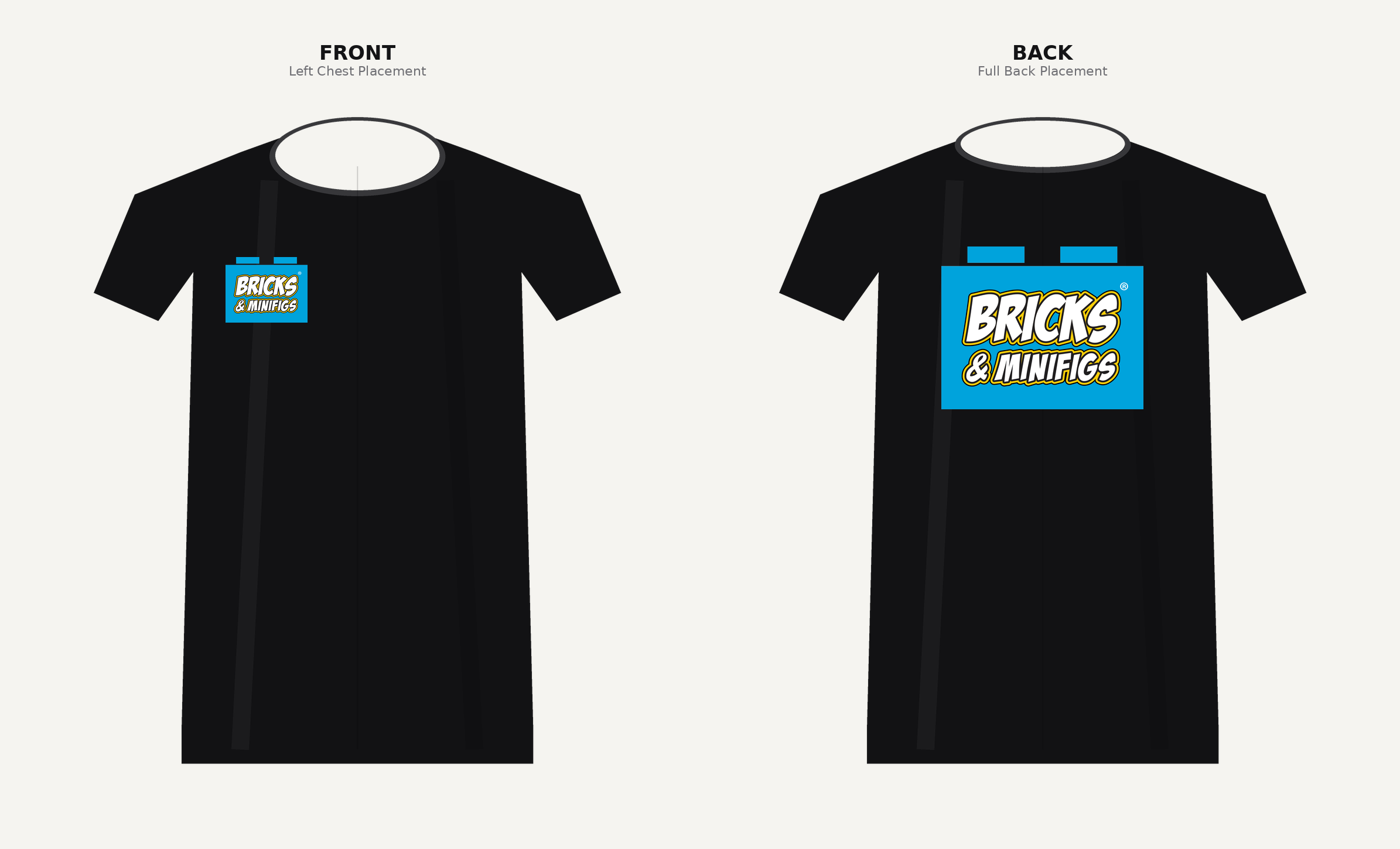
“Around that same time, we discovered a fast-growing LEGO® retail franchise model that checked every box we were looking for, a place where creativity, community, and building could live under one roof. In mid-2023, while still working full time in our corporate roles, we signed the lease for our first standalone LEGO® resale store. At the same time, we kept building our flower collection.… By late 2024, the momentum was impossible to ignore. We made the leap to focus fully on our LEGO® businesses. We opened a second retail location in a neighboring community and began sharing our flower designs with other stores throughout the franchise.… Every bloom we design is tested in our own LEGO® resale stores, where we see firsthand how customers interact with the products, how kids build with them, and how collectors mix different flowers together. This real-world feedback helps us refine designs, improve packaging, and expand the collection in ways that truly resonate with builders. It also allows us to support other retailers with products that are already proven to work on store shelves.”
A franchise store as the test bed, the rest of the franchise as the market, and the franchisor’s shelf as the channel. The manual invited exactly this. What the manual does not say is that the invitation, taken, makes the franchisor the store’s customer, its middleman, and its royalty collector on the same item.
The company knows the name. At its Q3 town hall, in the segment on the coaching “matrix” that will sort stores, Ki McAllister thanked two owners by first name for helping corporate stage its convention.
“Evan from Lansing and Ann Arbor, as well as Rob Warland, have been incredible helps. They, along with a bunch of other franchisee … have been helping with BamCon.”
Evan is Evan Borin. He signs the Michigan filings hosted above as the Lansing LLC’s “Owner,” and BAM’s outlet list gives him and Salima Borin both stores. His company’s tag sits on 108 of the corporate store’s 507 products, one in five. The man who supplies a fifth of the corporate shelf was thanked from the stage, in the segment about the matrix that will sort everyone else. The store that supplies the corporate shelf also helps run the corporate convention. The same segment explained the vendor decline by one name. The two stores also already run the system’s flagship loyalty program, “BAM Rewards,” “5% Back Every Day!” with points to “Earn and redeem at both stores,” while the marketing lead told the town hall the rest of the system may wait until 2027 for it.
| When | What the record shows |
|---|---|
| April 2022 | The Original Block Dreams LLC organized in Michigan by Evan Borin and Salima Matariyeh |
| Mid-2023 | First store lease signed, “while still working full time in our corporate roles” (their About page) |
| September 2023 | The LLC files the assumed name “Bricks and Minifigs Lansing” |
| October 2024 | Operations manual: ToyHouse is “our largest supplier of New in Box”; the corporate store sells branded goods and bulk buys |
| December 2024 | Second store opens in Ann Arbor; the LLC begins “sharing our flower designs with other stores throughout the franchise” |
| First quarter 2025 | BAM’s interim statement: corporate-store sales $599,654, pass-through payouts $225,465 |
| 2025, by the franchisee’s account | The corporate store becomes the LEGO channel: “We now order directly from a BAM corporate Shopify store” |
| September 23, 2025 | The Original Block Dreams Wholesale LLC organized |
| August 2026 | “August was a disaster”; restocks held at the warehouse; the town hall thanks “Evan from Lansing and Ann Arbor” |
| September 2026 | The corporate store admits only registered “B2B” customers |
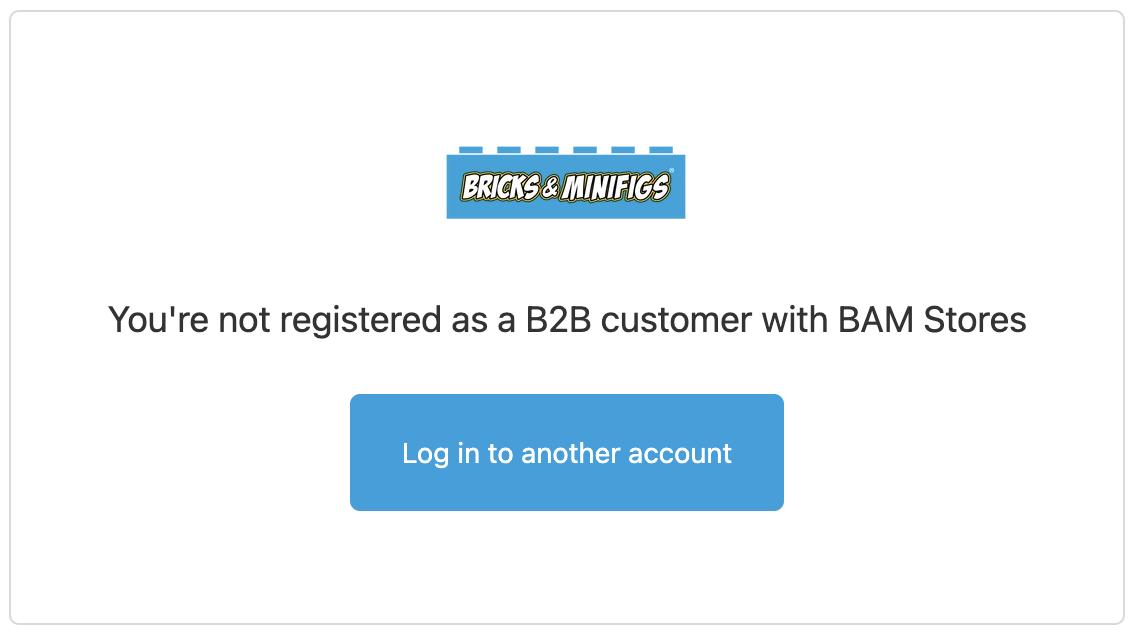
The catalog can no longer be read. A visitor who signs in without a BAM-issued account now gets one sentence, “You’re not registered as a B2B customer with BAM Stores,” and a button to log in as someone else. That is Shopify’s wholesale mode. The customers it registers are franchisees.
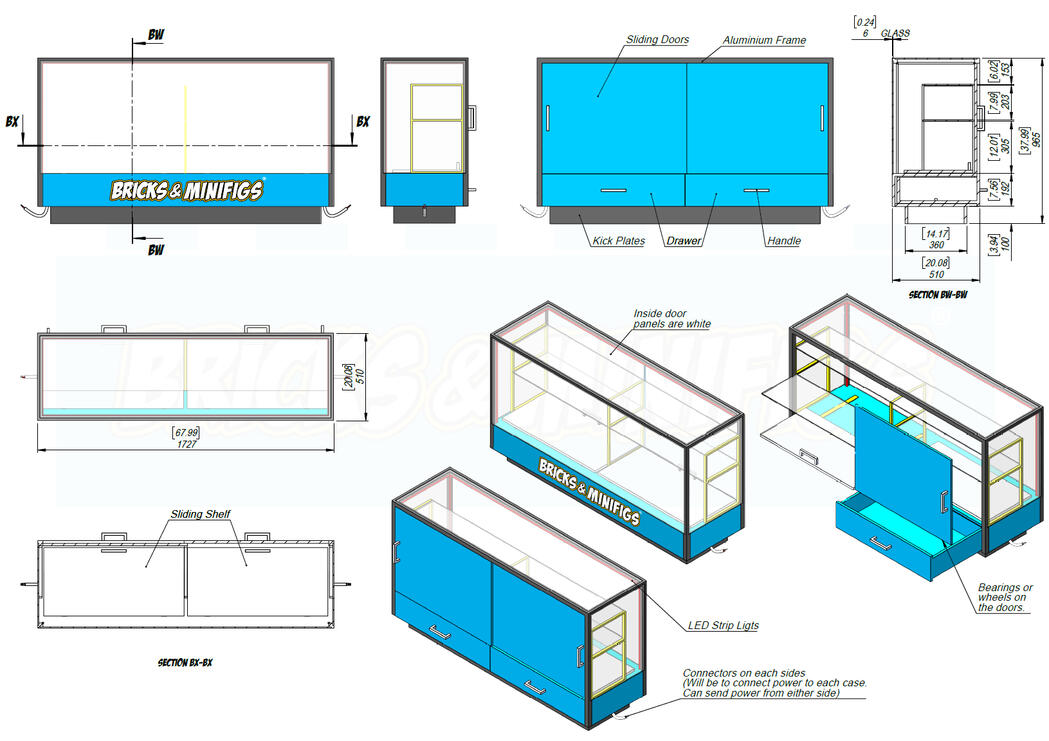
One more vendor on the shelf needs naming. Market Sculpt, 29 products, is a Lindon, Utah firm whose website offers “Ideation | Design | Packaging | Manufacturing | Import | Fulfillment.” Its client wall carries the Bricks & Minifigs logo, and its portfolio includes a dimensioned drawing of Bricks & Minifigs display cases. The disclosure requires stores to buy “branded fixtures” from designated suppliers it does not name. Its logistics affiliate sits in the town the manual gives for BAM’s warehouse; no document in hand says whether it runs it.
How a franchisee becomes a supplier
A privilege BAM grants, charges for, binds to confidentiality, and can withdraw.
The manual says how. Under “Make & Takes,” a product an owner or their staff makes may be sold in their own store once BAM approves it. Then:
“Once your submission is approved, you have the authorization to create and sell the approved products exclusively in your store. These items can be uniquely offered to your customers, enhancing the distinct character of your store’s offerings. Should you wish to extend the availability of your approved products to other BAM stores, kindly complete the Potential Vendor Request Form. This form enables us to assess the broader potential of your products and coordinate their distribution across our network of stores.”
The disclosure document sets the terms of that gate. Selling through “an alternative channel of distribution (such as Websites)” requires BAM’s written approval. If BAM does not answer in 30 days, “the request will be deemed disapproved.” “Approval may be revoked in our sole discretion.” The criteria for approval are BAM’s own, below.
Getting on the list costs money and silence. A “Product and Vendor Assessment Fee” runs $100 per product or vendor, up to $300 for twenty products. BAM “may require vendors and/or suppliers to provide certain information in addition to signing a nondisclosure agreement,” with samples tested “at your expense.” Item 11 says where a vendor’s payments can go.
“We base our specifications for products, supplies, vendor and supplier approvals on our discretionary determination of quality, accuracy of product claims, safety, value, prompt attention to complaints, frequency of delivery, appearance and contributions or other benefits to us and/or any marketing fund.”
“In addition, if we require you to buy items from a vendor who pays these allowances, we may place the funds in the Brand Fund or spend it on related promotions.”
When the vendor is a franchisee, that is a franchisee paying the franchisor for the right to sell to franchisees, into a fund the franchisees also pay into. And every vendor reports back: the required BAM email address is “how they know that you are authorized to wholesale pricing and how all inventory reports are tracked.” A franchisee who supplies the corporate store holds a privilege BAM grants, charges for, binds to confidentiality, and can withdraw. It is the same list that already forces every store to buy its apparel from a fellow franchisee, its signs from a broker, and its lease from a firm BAM steers it to.
Paid three times on one brick
The franchise agreement defines revenue so that both ends of a store-to-store sale owe royalty. One set BAM sells, then one case of a franchisee’s product BAM never touches. Every price is on the record.
The franchise agreement defines what royalty is charged on.
“‘Gross Revenues’ shall mean the total of all receipts derived from any source related to, or in connection with, the operation of your Store. Without limiting the generality of the foregoing, this definition includes, without limitation the following: all revenue accrued from the performance of services and the sale of products in, at, upon, about, through or from the Store, online or any other marketplace”
Royalty is 6% of that. The brand fund is another 1%. Now follow one set from LEGO, through BAM’s shelf, to a store’s customer. Every number on it comes from that card and from BAM’s own fee schedule.
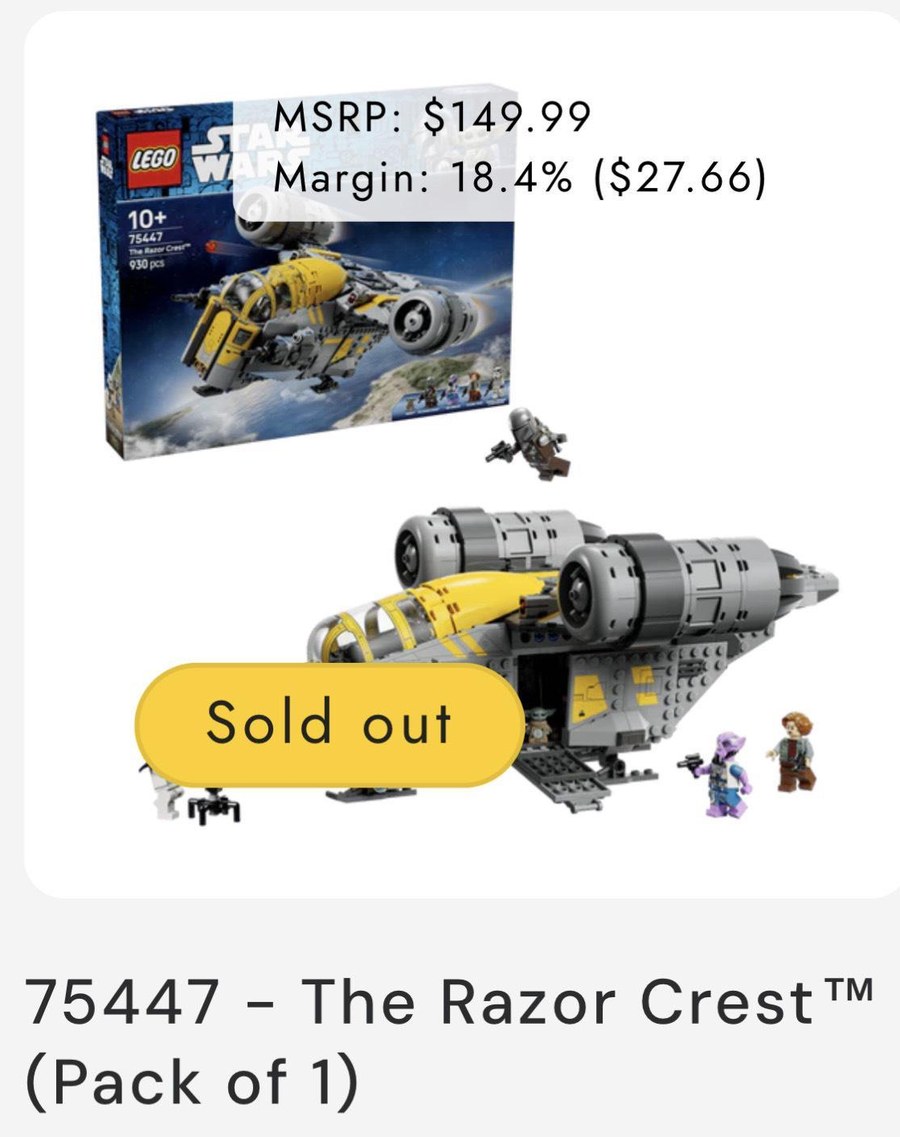
At $27.66 of margin on $149.99, the store paid BAM $122.33 for the set. When the store sells it, BAM takes 6% royalty and 1% fund: $10.50. The margin the franchisor displays inside its own ordering channel is the margin before the franchisor’s own cut. After it, the store keeps $17.16, before card fees, rent, and staff. What BAM paid LEGO for the set appears nowhere in its filings. Whatever it was, BAM was paid twice on the unit.
The store’s cost and the margin are from the product card, as the franchisee supplied it. The royalty and fund are the franchise agreement’s. BAM’s cost from LEGO appears nowhere in its filings. The figure uses a 30% spread. It could sit anywhere from 20% to 40%, and the slider under the table covers that range.
| One set: LEGO 75447, from the card | The store | BAM |
|---|---|---|
| The store buys the set from BAM (81.6% of MSRP) | pays $122.33 | receives $122.33 |
| The store sells it at MSRP | receives $149.99 | |
| 6% royalty + 1% fund on $149.99 | pays $10.50 | receives $10.50 |
| Left, before rent, staff and card fees | $17.16 | $10.50 plus its spread |
Every figure is from the card as the franchisee supplied it and the fee schedule in BAM’s own agreement. BAM’s cost from LEGO appears nowhere in its filings. The slider sets it.
Move the slider. The store’s $17.16 does not move at any setting.
That is the set BAM sells. The other case is the one the software is built for: a franchisee’s product, sold to another franchisee through BAM’s shelf. The Lansing store’s wholesale site lists a refillable bulk tub at “$6.83/tub shipped,” a case of 38 for $259.54. BAM’s manual prices a 16 oz Bulk Tub at “$14.00 or $13.89” once a store fills it and sells it. Both ends of that trade are Gross Revenue.
The case price is the Lansing store’s own wholesale listing. The retail price is the manual’s standardized price for a 16 oz Bulk Tub; the listing does not say the tub is that size. Royalty one is charged on what Lansing receives, so it falls as BAM’s cut rises. The figure uses a 20% cut, and the slider runs from none to 40%. What BAM keeps on a pass-through sale is not disclosed; its first-quarter 2025 statement books “Merchandise Sales (Shopify)” of $599,654 against “PassThrough Inventory Payouts” of $225,465 and does not say what it kept on any item.
Move the slider. Royalty two does not move at any setting, and neither royalty needs BAM to touch a tub.
Two royalties on one case that never touched Provo, and a cut in the middle that BAM does not disclose.
The franchisee said the same thing in fewer words.
“They did finalize the contract, but all it did was turn corporate into the third party vendor. Now they purchase from LEGO at whatever margins they agreed on and they sell it to the stores. The margins increased approximately 5-8%. … And don’t forget that they are profiting from selling to us and then collecting more in royalties off of those same products.”
What the disclosure says, and how it stays true
Every denial holds. None of them reaches the people on the shelf, and one of them describes a choice the CEO said does not exist.
Item 8 of the 2026 disclosure document, in the sentences a buyer reads:
“We are an approved supplier, but not the only approved supplier, of certain inventory for your Store.”
“We will derive revenue from providing products and services directly to our franchisees. In 2025, we received such revenue in the amount of $1,362,791 (which was 9.68% of our total revenue of $13,195,626 as reflected in our most recent audited financial statements).”
“No affiliates of BAM derived any revenue, rebates or other material consideration based on the required purchases or leases.” “None of our officers owns an interests in any supplier.”
The revenue sentence and the officer denial are read at length on this site already, with the ten-year growth of that number.
The disclosure sells independent stores. The software sells to B2B customers.
Every sentence holds. A franchisee is not an affiliate and not an officer. The corporate store’s two largest suppliers are franchisees. The sentence that tells a buyer no insider profits from the supply chain is drafted around the insiders who do. “Not the only approved supplier” describes a choice the town hall said does not exist: asked to choose a LEGO supplier again, the owners were told none. The same document sells the stores as independent retailers. The franchisor’s own store software sorts them as its B2B customers. “Independently owned and operated” is a sentence this site has already read four ways: one login runs every store’s website, the stores must buy from corporate, they were handed a script about the settlement. At least two stores’ own Shopify sites, Huntsville and Metairie, run a corporate-built theme called “Bam Debut Modified” that reports to a single Google Analytics property. Now add the shelf.
| BAM Franchising, audited | 2023 | 2024 | 2025 |
|---|---|---|---|
| Product sales | $1,706,207 | $3,523,979 | $4,313,977 |
| Cost of product | $1,531,416 | $2,774,737 | $3,501,250 |
| Royalty fee | $2,285,961 | $3,364,777 | $5,229,179 |
From the consolidated statements of operations in the 2026 FDD. Product sales grew two and a half times in two years. Item 8 attributes $1,362,791 of the 2025 figure to franchisee purchases.
The same Item 8 estimates that “required purchases from us, our affiliates or the vendors that we specify or approve (not including royalties or labor costs) are estimated to be approximately 5% to 10% of your total annual purchases of goods or services.” That estimate was written for a system whose new LEGO came from a distributor. Since last year it comes from the corporate store, and the town hall’s answer to choosing another supplier was none. Two pages from the front, on the state cover page, BAM is required to warn buyers: “Financial Condition. The franchisor’s financial condition, as reflected in its financial statements (see Item 21), calls into question the franchisor’s financial ability to provide services and support you.” The franchisor whose ability to support its stores is in question on its own cover page is the middleman on every brick its stores buy from each other, and the one that held their restocks in August.
Item 19, the earnings claim shown to buyers, runs on the same definition. “Total Revenue” there “means gross revenue minus adjustments, discounts, credits, returns, and sales taxes.” Nothing removes a store’s sales to other stores. The figures are “derived from reports submitted by franchisees and from company-owned locations. While we believe this information to be reliable, it has not been independently audited.” A store that supplies the corporate shelf reports its payouts as revenue, and that revenue rolls into the average that sells the next franchise.
The shelf that could not ship
Once the corporate store became the LEGO channel, its failures became every store’s. So did the relief.
At the town hall, Paul Hardcastle, BAM’s Director of Product and Logistics, described the warehouse behind it.
“And, and looking back at, at early on, we identified that, Hey, our current warehouse, um, the one that we started with just, just was not going to be able to cut it. Um, and a lot of that stemmed from their, their systems and procedures as we’ve toured FedEx and as we’ve worked with them. And as we continue to onboard with them, it’s become very, very apparent how different they are from our current warehouse. Now, once again, August was a disaster and, and, and I own that.”
A franchisee’s question from the queue put the consequence plainly.
“The August 1st resolution is still taking a long time. Uh, what is the timeline on restocks and what is the position going forward? Does corporate have the capability to float future orders or are we doomed when some stores cannot pay on time?”
“So as far as restocks, I think I mentioned this in, in my, um, portion, but we actually have restocks there at the warehouse and available. A lot of it’s, um, August order things, August order SKUs. We have been very reluctant, but we, we haven’t released that on Shopify yet because we wanted to get everybody to, to this point. We wanted to get everyone their first August orders and make sure everything was squared away there before we opened up, um, future orders.”
The goods sit in the warehouse; corporate decides when the shelf opens. The CEO, in the same meeting, described what the shelf is for.
“And that, that helps with, with our orders from Lego that helps with orders from other vendors that helps with our ability to warehouse other vendor product to have faster shipping for some of those other types of things.”
Other vendors’ product, warehoused by corporate and sold through the shelf: that is the pass-through line on the books, in the CEO’s words. The pipeline’s failure and the losses the stores reported are read elsewhere on this site.
Then the relief. The franchisee quoted above describes what BAM did after it studied the damage its own stores blamed on it: “After their internal financial assessment they just did to determine if this situation has affected sales their answer to ‘help’ the stores was to offer each store a $400 credit on the corporate Shopify store.” Relief spendable only on the franchisor’s shelf, where the franchisor keeps its spread on the way out and its royalty when the goods resell. The help routes through the toll road.
Put the documents in one line. The cover page warns buyers the franchisor may not be able to support them. The manual routes their supplies, their penalties, their custom orders and now their LEGO through one store the franchisor controls. The agreement counts what a store sells through that store as revenue the franchisor taxes. The catalog shows the store stocked mostly by two franchisees, whom the franchisor thanks from the stage in the segment that announces how it will sort the rest. The software calls all of them B2B customers. The disclosure says no officer and no affiliate profits from any of it, and it is right, because the profit runs through franchisees and the franchisor takes its share on both ends. When the store failed in August, the franchisor held the restocks and offered the stores $400 to spend on it.
What would settle it
Three documents, all in BAM’s hands. The corporate store’s sales by vendor. BAM’s purchase terms with LEGO. And what Item 8’s $1,362,791 counts, because the corporate store alone grossed $599,654 in the first quarter of 2025, a pace that would pass the year’s disclosed figure by summer. Whether the stores that supply the corporate shelf are also the stores at the top of BAM’s revenue rankings is a separate question. It waits for the ranking itself.
The fair reading, and its limit. Franchisees who make good products and sell them to peers are common in franchise systems, and BAM’s manual invites it in writing. Nothing here says the Carol Stream or Lansing owners did anything but accept the invitation, and their products may be exactly what other stores want. Buying in bulk through a corporate store can lower costs, and the franchisee quoted here says margins rose by five to eight points. Booking a supplier-store’s payout as its revenue is how the franchise agreement is written, and the agreement is disclosed. BAM’s estimate that required purchases are 5% to 10% of a store’s buying may still hold for many stores. The narrow points are BAM’s own. The corporate store is mostly stocked by two franchisees. The manual, the agreement, and the disclosure are drafted so that this is invisible in the sentences a buyer reads. And on every product that crosses that shelf, the franchisor is paid on the way in and on the way out.
Related on this site
The manual. The approved vendor list, Section 12, vendors and ordering, Sections 13 to 16, and the oath that it is genuine; the text itself at 12a, 12b, 13, and the vendor directory. The vendors. The apparel vendor that is a franchisee, the sign broker, Morrow Hill, LLC by LLC, and the marketing fund’s vendor criterion. “Independent.” One sentence, four versions, one login, required to buy from corporate, rules only BAM holds. The numbers. The number that sold the store and 700 million-dollar stores. The town hall. the answer was none and the vendor decline, explained by one name.
Sources. The Bricks & Minifigs Operations Manual, V.10.6.24, §§12.2, 12.6, 12.8, 13, and its vendor directory, as published at bamopsmanual.com. BAM’s corporate Shopify store (bam-stores.myshopify.com), catalog and store record as publicly readable before the store was gated; its account gate as shown to a signed-in visitor this month. Michigan Department of Licensing and Regulatory Affairs filings for The Original Block Dreams LLC (ID 802829154) and The Original Block Dreams Wholesale LLC (entity 900097222), hosted above, with the 2022 articles and the 2025 annual statements in the same file. Illinois Secretary of State record for Demer Squared LLC (file 06626149), hosted above. BAM’s 2026 Franchise Disclosure Document: Items 6, 8, 12, 19, 21 (the consolidated statements and the interim profit and loss), Exhibit F, and the franchise agreement’s definition of Gross Revenues, quoted verbatim; the disclosure record. The anonymous franchisee’s written interview, published by Collecting Weekly on August 16, 2026, quoted from the published document; the product card as published with it. The Original Block Dreams LLC’s own website: its About, Wholesale B2B and promotion pages, its public catalog, and its store record. Market Sculpt’s website. The page code of the Huntsville and Metairie stores’ own websites.
The BAM Map is independent reporting on matters of public concern. Nothing here is a finding of any person’s guilt; every official named is presumed to have acted lawfully. Sources are linked so readers can check the record. · Home · Map · The law · Bodycam