A store offered $116 for a $988 LEGO collection and blamed the dust. BAM’s buying calculator has a setting called “dust collector.”
PRIMARY SOURCEthe Bricks & Minifigs buying calculator, publicly downloadable with no login from a Bricks & Minifigs store website on BAM’s own domain, bricksandminifigs.com
A young man took three of his own LEGO sets into a Bricks & Minifigs to sell them for his eighteenth birthday. He is autistic, and his mother came along. The store offered $116 for all three and said the offer was low because the LEGO was dusty. The family walked out, drove to another Bricks & Minifigs, and were offered $500 for the same three sets the same day. Their account is a public interview with the collecting channel Echo Base Network.
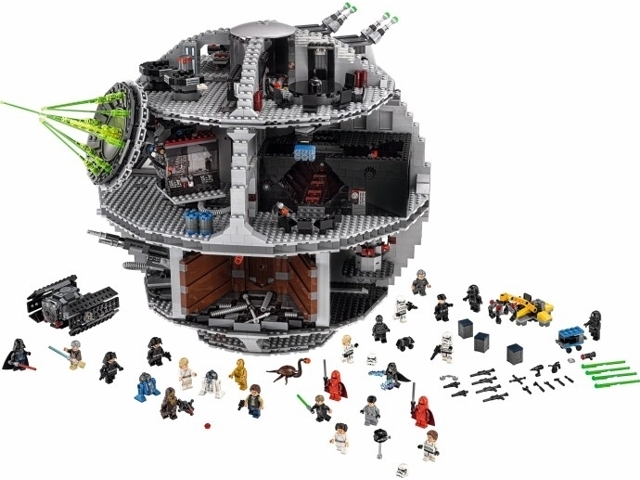

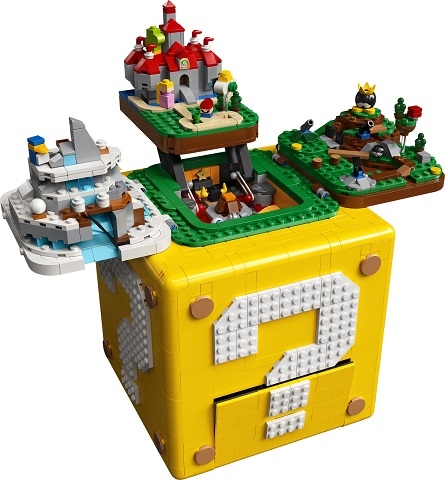
The young man no longer had the Death Star’s box, which lowers it, and by the recent eBay sales that BAM’s own manual uses to price sets, Echo Base Network valued the three closer to $700. Either way, the better part of a thousand dollars of LEGO. One store offered a tenth of it. The other offered half, the same day.
Where the low number comes from
BAM has a tool that decides these offers. Its operations manual calls it the Buy Calculator and tells franchisees to “download a new copy of the Buying Calculator from the G-Drive.” A working copy is sitting on the open internet, with no login, on a Bricks & Minifigs store website on BAM’s own domain. It begins with an estimate of an item’s value and multiplies that estimate by a row of settings, each of them less than one. One is a desirability setting whose lowest option is named “dust collector.” Another lowers the rate as the total climbs, so the more a person brings in, the smaller the share they are offered. And it fixes the cash offer at half of the store-credit offer.
CONFIRMEDThe calculator’s desirability setting has a lowest option named “dust collector” that subtracts twenty percent from an offer. In the tool it rates how slowly an item is expected to sell. It is not a measure of whether the item is dirty.
So the reason the customer was given, dust, is the name of a button in the pricing tool, and the button takes off twenty percent. The customer heard an excuse about a dirty toy. The tool recorded a markdown for a slow seller.
The employee also told the family the sets would have to be taken apart, cleaned, and rebuilt, another reason the offer was low. The manual says the opposite. Its instruction for a complete used set is to “get them assembled… and then put them out on display”, kept built, not torn down. The only place it describes breaking a build apart is when a set is being dumped into loose bulk, not sold. Its cleaning section is about washing loose bricks, notes that “many of our stores choose not to clean any of their LEGO,” and adds that “most customers understand it’s a used product and will clean it themselves at home anyway.”
CONFIRMEDBAM’s operations manual processes a complete used set by keeping it assembled and putting it on display, and treats cleaning as optional, something customers “will clean… themselves at home anyway.” It contains no step to disassemble and rebuild a complete set over dust.
The same calculator makes both offers
We entered the family’s three sets into it. The floor and the ceiling are both settings on one machine. Enter the sets at the low, “dusty” value the first store used and switch on “dust collector,” and the calculator drops toward $116. Enter the same sets at their real BrickLink value with “dust collector” off, and it climbs toward $500. Same collection, same tool; all that changed is how the dials are set. We do not know which options either store chose. What the calculator shows is that both offers, the $116 and the $500, are numbers it will produce for these three sets.
| Used set | Value | Desirability | After “dust collector” |
|---|---|---|---|
| Death Star (UCS) | $375 | dust collector | $300 |
| X-Wing (UCS) | $185 | dust collector | $148 |
| Super Mario Block | $148 | dust collector | $118 |
| Adjusted subtotal | $566 | ||
| Cash offer | $99 – $137 | ||
Try it yourself
Below is a working copy of the same arithmetic BAM’s calculator runs on used sets, with BAM’s own default percentages. Put in what a set is worth, choose the settings, and watch the offer. It opens on the family’s three sets.
The discretion is real. This is where store owners have room. Corporate builds the calculator and sets its defaults, but the customization page lets each store turn the dials, and the offer a customer gets depends on how they are turned. One store took this collection to the floor. Another, the same day, treated it fairly, and the family says so. The tool does not force the $116. It makes it easy, and it makes it look calculated.
The tool BAM says is private
On July 31, 2026, BAM Franchising swore under penalty of perjury that its operations manual is “a copy of our private and proprietary franchisee owners manual,” that it is “not intended for public access,” and that “the original document resides in our internal Google Drive, and is not accessible to the public.” That oath is reported here. The calculator above is the tool that manual describes, and it is public, on BAM’s own website, put there by BAM. By the date in its own web address, the file has sat there since 2024. It was public before the oath, and it is public now.
Here is a decision this site does not make lightly, and having to make it at all is part of the story. The BAM Map does not publish customer records. The file that proves all of this still holds a page of real people’s names and purchases, and pointing readers to it can hurt people who did nothing but sell some LEGO. We weighed hosting a copy with that page removed, but BAM has demanded this site take down its materials before, its support portal, its manual, and would demand it again, so a cleaned copy here would not survive. That leaves one reference BAM cannot pull off this record: the calculator file BAM itself has left in the open, customer records and all. It is one spreadsheet, the pricing tool on one page and a log of real customers’ trades on another. We are linking it, and we are uneasy about linking it, and that unease is the measure of the thing. A newsroom stops to weigh whether it is even right to point at this document. BAM published it, its customers inside, and walked away. BAM’s buying calculator is here, on BAM’s own website, no login, exactly as BAM left it, the same kind of failure this site has documented before. If you open it, extend these customers the care their own store did not, and leave their records alone.
It is the same shape as the manual. When BAM first objected to this reporting, it demanded the removal of an archive of its Freshdesk franchisee support portal, calling it proprietary. This site took its copy down. BAM’s own copy of that portal is still public, no login, on BAM’s own hosting.
CONFIRMEDBAM’s franchisee support portal remains publicly accessible, no login required, at bamfran.freshdesk.com.
The second store’s $500 shows what the LEGO was worth. The first store’s $116 shows what the tool allows. BAM asks the public to take down copies of the materials it calls confidential, and leaves the tool that sets these offers, the manual that describes it, and a page of its customers’ records, public on its own websites.
Sources. The family’s account, the $116 and $500 offers, and the “dusty” explanation are from a public interview published by Echo Base Network. The set values are the BrickLink price guide’s recent used sold averages, retrieved August 9, 2026: Death Star (UCS) about $648, X-Wing Starfighter (UCS) about $173, Super Mario 64 Question Block about $167. BAM’s operations manual prices sets from recent eBay sales and minifigs from BrickLink. Set photographs are from BrickLink. The buying calculator was observed publicly downloadable, with no login, from a Bricks & Minifigs store website on bricksandminifigs.com; its “dust collector” setting, its volume reduction, and its cash-at-half-of-credit rule are in the file, and its three pages match the “Buy Calculator” the operations manual describes and instructs franchisees to “download… from the G-Drive.” The $116 and $500 figures are the tool’s own outputs when the three sets are entered at those settings. BAM’s sworn statement that the manual is “private and proprietary” and “not accessible to the public” is the DMCA notice filed by BAM Franchising, Inc. and received by Cloudflare on July 31, 2026, Lumen Database notice 92479267, reported here. BAM’s franchisee support portal was publicly accessible at bamfran.freshdesk.com at this writing. This site’s reporting on BAM’s handling of customer data is here and here.
The BAM Map is independent. It is not owned by, operated by, or affiliated with BAM. It cites and links its sources, BAM’s own filings and the public record among them.
The BAM Map is independent reporting on matters of public concern. Nothing here is a finding of any person’s guilt; the criminal charges referenced are unadjudicated and every defendant is presumed innocent. Sources are linked so readers can check the record. · Home · Map · The law · Bodycam