The tipster BAM redacted was its own chief technology officer
CONFIRMEDBAM’s redaction is defective and selectiveCONFIRMEDthe sender it covered is BAM’s own chief technology officer, by BAM’s own disclosure
Primary sources: the exhibits BAM filed with its verified complaint in BAM Franchising, Inc. v. Madventures, Inc., Utah Fourth District Court No. 240400022 (filed January 4, 2024); BAM Franchising, Inc. Franchise Disclosure Document, 2026 edition, Item 2. Related: The machine, The store, the map.
In January 2024 Bricks & Minifigs sued a California franchisee who had rebranded his two stores. One of the exhibits it filed was a competitor’s marketing email, forwarded to chief executive Ammon McNeff with the note “Since I shop there, I get their marketing emails.” BAM blacked out who sent it. The boxes were painted over a picture of the email; the words underneath were never deleted. They are still in the file BAM filed. The sender is BAM’s own chief technology officer, who by BAM’s own disclosure also owns a Bricks & Minifigs store.
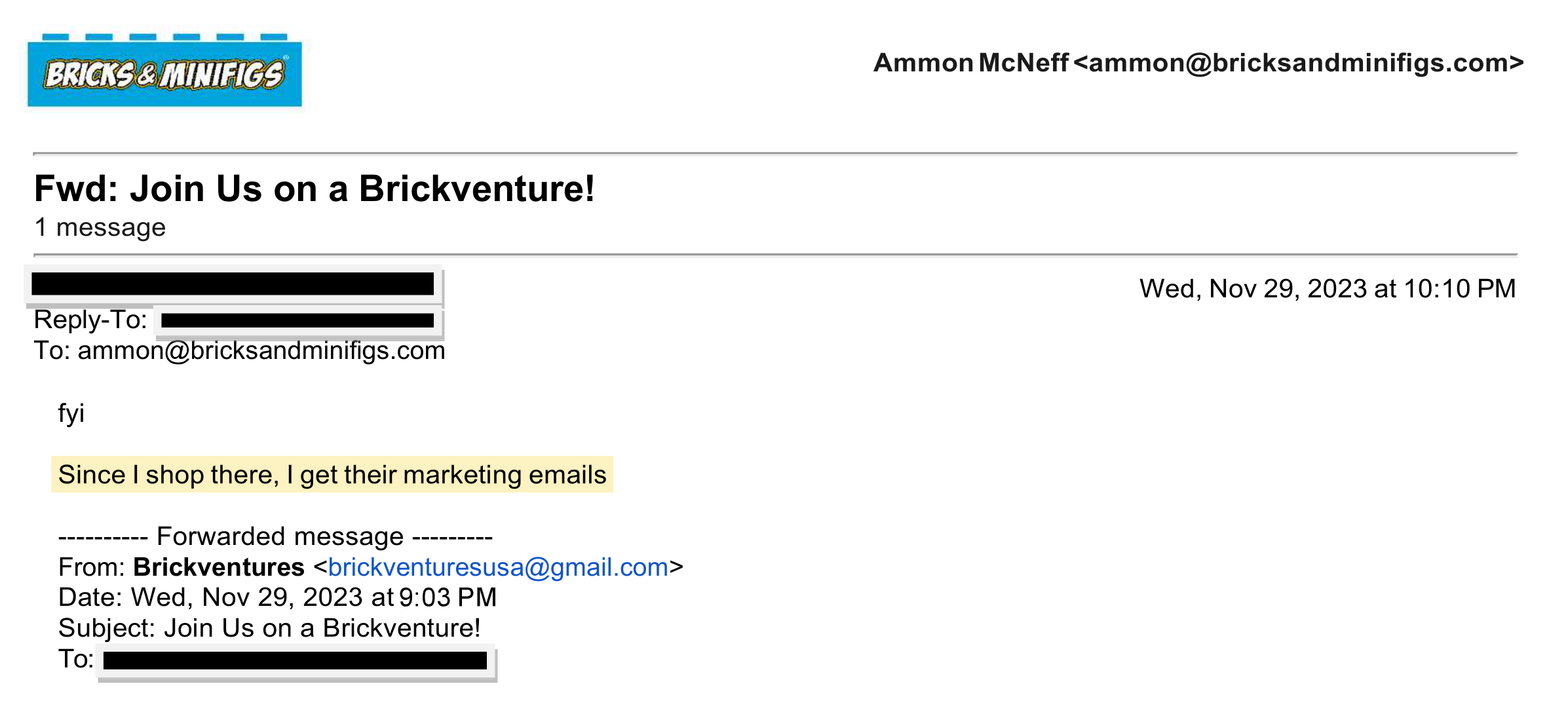
Exhibit I to BAM’s verified complaint, as filed. Three fields are covered; two are left in the clear. The highlighting is BAM’s. Download the exhibit as filed (PDF, 4 pages). It is the unaltered court copy, so the defect described below can be checked in it directly.
The redaction is selective CONFIRMED
Five fields on the page identify someone. BAM covered three: the sender line, the reply-to, and the “To:” on the forwarded message. It left two: its own chief executive’s address, and the competitor’s. The three it covered are the three that name the sender. Nothing else on the page was touched. This is not a privacy scrub. It is one identity taken off a page that keeps every other.
The redaction does not work CONFIRMED
To redact a document is to delete the words, then cover the space they left. This exhibit does only the second half. Nothing was removed. Black rectangles were painted over a picture of the email, and the words sit under them still. Select the text of BAM’s own filing and it reads back what the boxes were meant to bury: the message was forwarded by Mike Wu, from an address on a wufambam.com domain. This article does not print his personal address; the name is the point. The exhibit BAM filed still carries it, which is the defect.
Who the sender is CONFIRMED
The identification takes no guesswork, because BAM published it. Its 2026 disclosure document, in the biographies of its own officers, names “Mike Wu, Chief Technology Officer,” who “has been our Chief Technology Officer since October 2023.” The same paragraph says he “opened his Bricks & Minifigs franchise unit in San Ramon, California, and later that year accepted the role of CTO.” By BAM’s own account the man who forwarded a competitor’s email to the chief executive was two things at once: a Bricks & Minifigs store owner, and an officer of the company. The forward is dated one month into the job.
The two timestamps on the exhibit sit an hour apart. The competitor sent its marketing email at 9:03 that evening. It was in the chief executive’s inbox at 10:10.
Why it matters INFERENCE
A franchisor moving against a franchisee wants the reason to look as though it came from the world: somebody noticed, word got back, the company acted. The exhibit says exactly that, and BAM highlighted the sentence that says it. The layer underneath says something else. The watching was done by an officer of the company, who owns a store of his own, and it reached the chief executive within the hour. Then the company covered his name and filed the page.
A company does not black out a stranger. The redaction is BAM’s own measure of what the name was worth. The shape is familiar from the rest of this record: an “independent” buyer for a seized store, a neutral complainant with his own seat in the enterprise. The distance is built where the reader will look for it. This time it was built over a text layer nobody deleted.
What became of the case CONFIRMED
BAM filed on January 4, 2024, in five parts, with a jury demand, and served five days later. Then nothing. On July 17 the court noticed its intent to dismiss for failure to prosecute; on August 26 it dismissed the case under Rule 4-103 for inactivity, without prejudice. No injunction was sought. No ruling was made. No court passed on any of it. The suit was filed, served, and abandoned, and dismissal without prejudice means it can be brought again.
In fairness: the note may be literally true. A California store owner would receive a competing store’s marketing emails as an ordinary subscriber, and there is nothing unlawful in that, nor in redacting an exhibit, nor in a franchisor enforcing its agreements. The cure and termination letter went out on November 24, five days before the forward, so the message did not begin the dispute and is not described here as having done so. The point is narrower, and it is BAM’s own to answer: the company covered one identity on a page where it left every other, and that identity was its own officer. Every person named keeps the presumption of innocence.
BAM filed the tip and covered the tipster. The cover was painted on. The tipster is BAM’s own chief technology officer.
Sources. BAM Franchising, Inc. v. Madventures, Inc., Utah Fourth District Court No. 240400022: the verified complaint filed January 4, 2024 and the exhibits filed with it, including Exhibit I, reproduced above as filed (full page), and Exhibit K, the cure and termination letter dated November 24, 2023; docket entries for service on January 9, 2024, the notice of intent to dismiss of July 17, 2024, and the order of dismissal of August 26, 2024. BAM Franchising, Inc. Franchise Disclosure Document, 2026 edition, Item 2, officer biographies. The company’s officers and structure are on the map; the enforcement pattern is in The machine.

The BAM Map is independent reporting on matters of public concern. Nothing here is a finding of any person’s guilt; the criminal charges referenced are unadjudicated and every defendant is presumed innocent. Sources are linked so readers can check the record. · Home · Map · The law · Bodycam