American Fork’s tax increase can be stopped by its residents.
PRIMARY SOURCEEvery quote below is from American Fork City’s own recording of its August 11 Truth in Taxation hearing, the city’s own budget documents and council minutes, or the Utah Code. Where a spoken quote is load-bearing, it was checked against two independent recordings of the hearing.
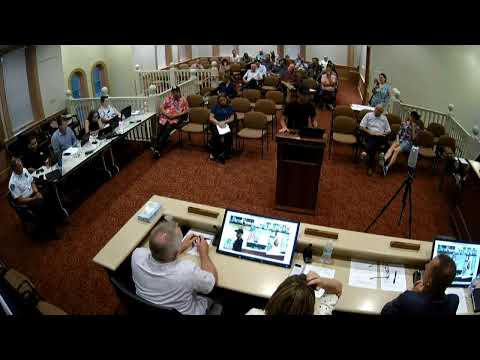
On Tuesday, August 25, the American Fork City Council votes on an 8.48 percent city property tax increase, $33.41 a year on an average home, presented as staffing for a new fire station. The hearing about it happened because a statute requires one. The statute’s name is Truth in Taxation. The statute writes some of the words itself: the notice, the dollar figure, a written impact schedule, and, if residents ask for one, the ballot question. Everywhere the law wrote the words, the numbers agree. Everywhere the city chose its own, they differ from the city’s documents. And the one part of the machinery nobody mentioned in the room is the part that lets residents freeze the increase.
Where the law wrote the words
Utah Code 59-2-919 forced the advertisement, the mailed notice, and the hearing itself. A 2026 law, HB 236, forced something new this year: a written property tax impact schedule, adopted in public, stating what the increase actually funds. Former councilman Robert Shelton noted its newness from the microphone: “this is the first year you have to have the public impact statement.”
The compelled documents all say the same thing. The notice says 8.48 percent and $33.41. The impact schedule, adopted May 12, says the increase generates $660,000 and “will fund staffing for 4 of 9 fulltime firefighter/paramedics.” The budget says the nine firefighters cost $1.5 million a year, with the rest absorbed by cuts.
Where the city chose the words
At the podium on August 11, City Administrator David Bunker described the same facts in his own words.
CONFIRMEDEvery spoken quote in the table was checked against three independent transcriptions: the city’s own recording, an attendee’s recording, and a separate machine transcription of the city audio. All three agree. The document quotes are from the city’s published budget, notice, and minutes.
| The documents | The podium, August 11 |
|---|---|
| The FY2027 budget carries capital projects forward by name: “Roundabout at 300 West and 200 South - $780,000 (carryover from fiscal year 2025-26).” The phrase “zero-based” appears nowhere in either budget document. | “We start with a zero-based budgeting method where we don’t carry forward anything in individual line items to the next year.” |
| The impact schedule the council adopted in May: the tax funds 4 of the 9 new firefighters ($660,000 of $1,415,000). | Presented as staffing the station’s 9 of 12 firefighters: $660,000 against “approximately 1.5 million.” |
| The statutory notice of record: 8.48 percent. | “An 8.7 tax increase.” Said twice, in both recordings. |
| The city’s own January staff report: the station site comes by a property exchange with UDOT. Listed budget impact: $0. | “We’re in the process of acquiring a property with a home that will be converted into a fire station.” |
| The May 12 minutes: personnel costs $1.4 million, and “the difference of $755,000 is being absorbed in the budget.” | “The personal costs are approximately $1.5 million annually... where is the remainder of the $840,000 coming from?” |
Of those five statements, four differ from the city’s own documents in the direction that favors the increase. The fifth misquotes the city’s own advertised rate, upward.
One more number belongs in the record: the budget carries $200,000 for “Station 53 Temp Location” as approved but not spent, while the local paper reported in May that it had been spent. The city’s documents do not reconcile the two. And the statement that American Fork has raised property tax twice in thirty years, in 2008 and 2021, appears only in the city’s own presentations; no independent record appears either way.
The councilman who ran twelve of these budgets
The sharpest audit of the presentation came from inside the room, reported in full in the site’s account of the hearing: Robert Shelton, on this council from January 2012 to December 2023 by the city’s own press release, told the council the budgeting claim “doesn’t jive” and that the firemen were being treated “as political pawns to say that will get public support.” He did not mention the twelve years at the microphone.
What is new here is the check: the budget’s own staffing table lists the positions he named from the podium, “add 1.0 FTE accountant (full-time) and 0.60 FTE communications specialist (part-time),” in the same document that adds the nine firefighters the tax is for.
The room, graded both ways
The hearing report carried the residents’ arguments; the same standard applies to them. Ryan Walker told the council city wages grow about ten percent a year against three to five in the private sector. The city’s own compensation reports bear him out: total payroll grew 10.9, 9.6, and 8.2 percent in the last three fiscal years, $22.5 million to $26.8 million. Klein Long’s budget figure is consistent with the adopted total of $210.6 million.
Daniel Soroka, an accountant, put a number on the city’s settlements: $725,000. His number cannot be checked against any official record. That is not a finding about his number. It is a finding about the record: none exists. The audited statements disclose the shape of the cost but not the cost. The city is “a defendant in certain legal actions,” the ultimate liability “not presently determinable”; the claims are commercially insured, so what they cost the public arrives as premiums and deductibles the statements do not break out. Nothing in the budget, the audit, or the state’s transparency ledger states what the claims have cost, this year or in any year. A resident who wants that number has to compile it himself. An accountant did, and the only place it now exists is the record of the hearing the law required the city to hold.
The resident’s tax is stated to the penny: $33.41. The cost of the claims is stated nowhere.
The numbers that were not in the presentation
Numbers from the city’s own documents, laid next to the ask. The nine firefighters cost $1.5 million a year. The tax raises $660,000, and it does not end: an adopted increase resets the certified rate permanently, every year after, on a base that grows with the city.
The certified rate has one more property, and the administrator explained it himself at the podium: the rate floats so the dollars stay constant. Values rise, the rate falls. And “if the property values fall, the certified tax rate will increase,” he said, “again bringing in the same dollar to the entity.” The $33.41 is an estimate at this year’s values. The $660,000 is the guarantee. If home values fall, the rate rises until the city collects it anyway. He named the exception too: “additional taxable value can be generated due to new construction,” which is to say growth already pays the city new revenue every year, automatically, with no hearing required. The increase is on top of that.
The city absorbed fire station #52 at $9,356,929 in fiscal 2024. Its own February 2024 work session records that the permanent Station 53 “would be a GO bond.” This March it renewed the Cedar Hills public safety contract at an escalator of “2% more than the average national 12-month Consumer Price Index,” about 4.7 percent this year, while its own payroll has grown eight to eleven percent a year. Each of those numbers was in the city’s possession on August 11. None was in the presentation.
The land, corrected
The site’s August 12 report repeated the city’s framing that the station sits on “a house the city is buying.” The city’s own staff report says otherwise, and the correction belongs here: the station sits on a seven-acre farm UDOT bought in 2010 for the Vineyard Connector, coming to the city in a $0 land exchange for 8.5 city acres UDOT needs, after the highway project lost its funding. The land was never what the tax was for. The deed has not recorded. The annexation is pending. The budget says October.
The part of the machinery nobody said out loud
CONFIRMEDThe word “referendum” was not spoken at the hearing. It appears in neither recording, from anyone.
Utah’s Truth in Taxation machinery does not end at the hearing. A companion statute, Utah Code 20A-7-613, exists for exactly one situation: a city council votes to exceed its certified tax rate, and residents want the question put to them instead. It is not a general protest right. It is a purpose-built instrument with its own accelerated clock, and it works like this:
| Step | What the law says |
|---|---|
| Within 7 days of the vote | Five sponsors, each registered to vote in Utah, file a referendum application with the city recorder before 5 p.m. The statute lists what it contains: the sponsors’ names and addresses, their notarized signatures, a designated sponsor liaison, a statement on whether signature gatherers will be paid, and a copy of the resolution being challenged. |
| ~30 days | Signatures of 10 percent of the city’s active voters, spread across three-quarters of its voter participation areas, on the order of two thousand signatures, on an accelerated packet clock. |
| Immediately on filing | The freeze. Under 613(10)(a), once the petition is filed, the city’s rate for this fiscal year stays at the old certified rate no matter what happens. If the referendum later fails, the increase can begin only the following year. If voters reject it, it does not begin at all. |
| Next election | The question goes on the ballot at the next general or municipal election, unless a special election is called. |
The legislature even wrote the ballot question itself, and its words contain no fire station:
“Shall the [name of the taxing entity] be authorized to levy a tax rate in the amount sufficient to generate an increased property tax revenue of [amount] for fiscal year [year] as budgeted, adopted, and approved by the [name of the taxing entity].”
That is the whole question, as the law asks it: the entity, the amount, the year.
The council votes August 25. The seven days begin August 26.
To be fair, and it matters. The station need is real by every document in this record: the city’s own budget calls Station 51 “the busiest fire station in Utah County that responds out of a single station”, the southwest of the city is growing, and nine firefighter/paramedic positions are genuinely in the budget. The comparison Mr. Bunker offered was accurate: Eagle Mountain’s council adopted a 183 percent increase four days before he cited it. Alpine School District is not raising taxes this year; one resident spoke in favor of the increase on medical response grounds, and her reasons deserve the same weight as every other speaker’s. Statements at a Truth in Taxation hearing are not sworn testimony, and nothing in this report is a finding that any law was broken by anyone. The land exchange with UDOT is documented, lawful, and budgeted at zero; the referendum statute is a neutral instrument that residents may equally choose not to use. Whether $33.41 a year is worth nine firefighters is a question for the people who live there, which is, in the end, exactly what the statute says.
Sources: American Fork City’s own recording of the 2026 Truth in Taxation hearing, published to its YouTube channel, transcribed in full and cross-checked against an attendee recording; the city’s FY-2027 interim budget and tentative budget; the February 2024 work session and the May 12, January 27, and March 24, 2026 council minutes and packets on the city’s Agenda Center, including the January 27 UDOT exchange staff report and the March 24 Cedar Hills public safety agreement; the city’s FY2024 Annual Comprehensive Financial Report, Notes 10 and 11; compensation data from the state’s Transparent Utah system; the city’s January 2, 2024 press release on Robert Shelton’s tenure; Utah Code 59-2-919, 20A-7-601, 20A-7-602, and 20A-7-613; the Lieutenant Governor’s local referendum instructions; the Daily Herald on Eagle Mountain; and the American Fork Citizen. See also the hearing, reported, the stop, measured, and the bodycam record.
The BAM Map is independent reporting on matters of public concern. Nothing here is a finding of any person’s guilt; every official named is presumed to have acted lawfully, and the criminal cases referenced elsewhere on this site are unadjudicated. Sources are linked so readers can check the record. · Home · Map · The law · Bodycam