How we know · the LEGO seizure
Who actually took over the Keizer store
Bryan Mansell consigned his elderly father’s LEGO collection to a store to sell. The night it was seized, both sides were taking pictures. Here is what those pictures prove, and how.
How to read this investigation
Every claim is tagged with where it came from and how sure we are. Two picture records tell this story, made by opposite sides, plus the sworn paper trail:
And every finding wears its confidence:
On the evening of November 14, 2024, at 7:54 PM, Chrystal Law and Benjamin Gorman stood in a Bricks & Minifigs store in Keizer, Oregon and photographed the shelves. On them sat the LEGO collection Bryan Mansell had consigned to the store to sell on his family’s behalf. In the pictures the sets are boxed, wearing the store’s yellow consignment stickers and price tags, the paper marks that said these belong to the Mansells. That same night, control of the store changed hands, and the Mansell collection was swept up with it.
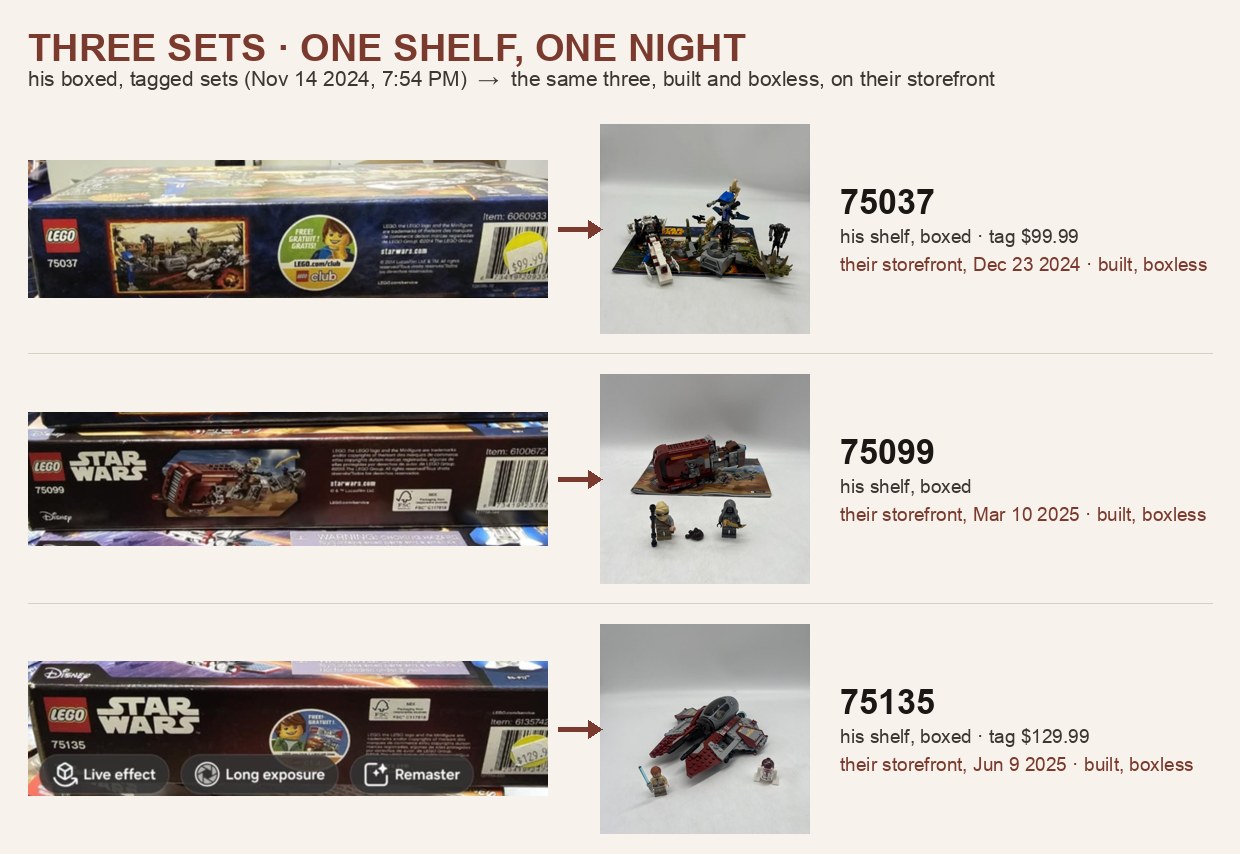
What sits between those two frames is this investigation. The Mansell collection can be watched the whole way, because Brandon Best and Josh Johnson kept a public record of what they sold, and Chrystal Law and Benjamin Gorman kept a timestamped record of what was taken. Follow it.
The collection arrived all at once
Best and Johnson’s own store clock
Best and Johnson’s Eugene store lists every product publicly, and the server timestamps each one. Inside its used Star Wars sets, a normal day brings one or two. Five weeks after the seizure, on December 23 and 24, 2024, the catalog swallowed 23 used Star Wars sets in a single two-day sitting, and 13 of them were Bryan Mansell’s exact set numbers. Nothing else in five years looks like it.
Used Star Wars sets logged per day
Best & Johnson’s Eugene catalog, 2021–2026
A typical active day is a set or two; the Poisson probability of the Dec 23–24 spike, against the store’s own rate, is about 6 in 100,000 even after the most conservative correction. Confirmed
In plain English
The normal rate is about a third of one of Mansell’s sets in any two-day window. Getting 13 is not unlucky, it is off the map. That is the statistical fingerprint of one collection processed at once, not walk-in trades arriving one by one.
And they were processed as one job: the upload times place 12 of the 13 within twelve minutes of each other, across two mornings, every photo at the identical resolution. One person, one camera, one sitting. BEST + JOHNSON’S STORE Confirmed
Why the dates can’t be faked
The un-forgeable clock
In plain English
A store can type any “created” date onto a product. What it cannot edit is the hidden serial number the computer assigns in order, #1, then #2, always climbing. Sort every product by that serial and check whether the typed dates ever run backwards against it.
They never do. Not once in 14,749 items. The typed dates line up with the un-editable order perfectly, which is only possible if nobody rewrote them. That single check is what makes the December 23 date, and every date here, load-bearing. BEST + JOHNSON’S STORE Confirmed
How it got 65 miles to Eugene
The U-Hauls, and the denial
Keizer to Eugene is 65 miles. The collection did not walk. On the night of the takeover, November 14, 2024, the Keizer store’s own security camera, looking out through its storefront glass, recorded a U-Haul parked at the curb. That truck has a paper trail: contract 15284899, a 15-foot truck rented in Eugene on Brandon Best’s account at 10:17 that morning, its drop-off odometer photo timestamped back at that Eugene lot at 12:41 AM. STORE CAMERA + RENTAL RECORD Confirmed
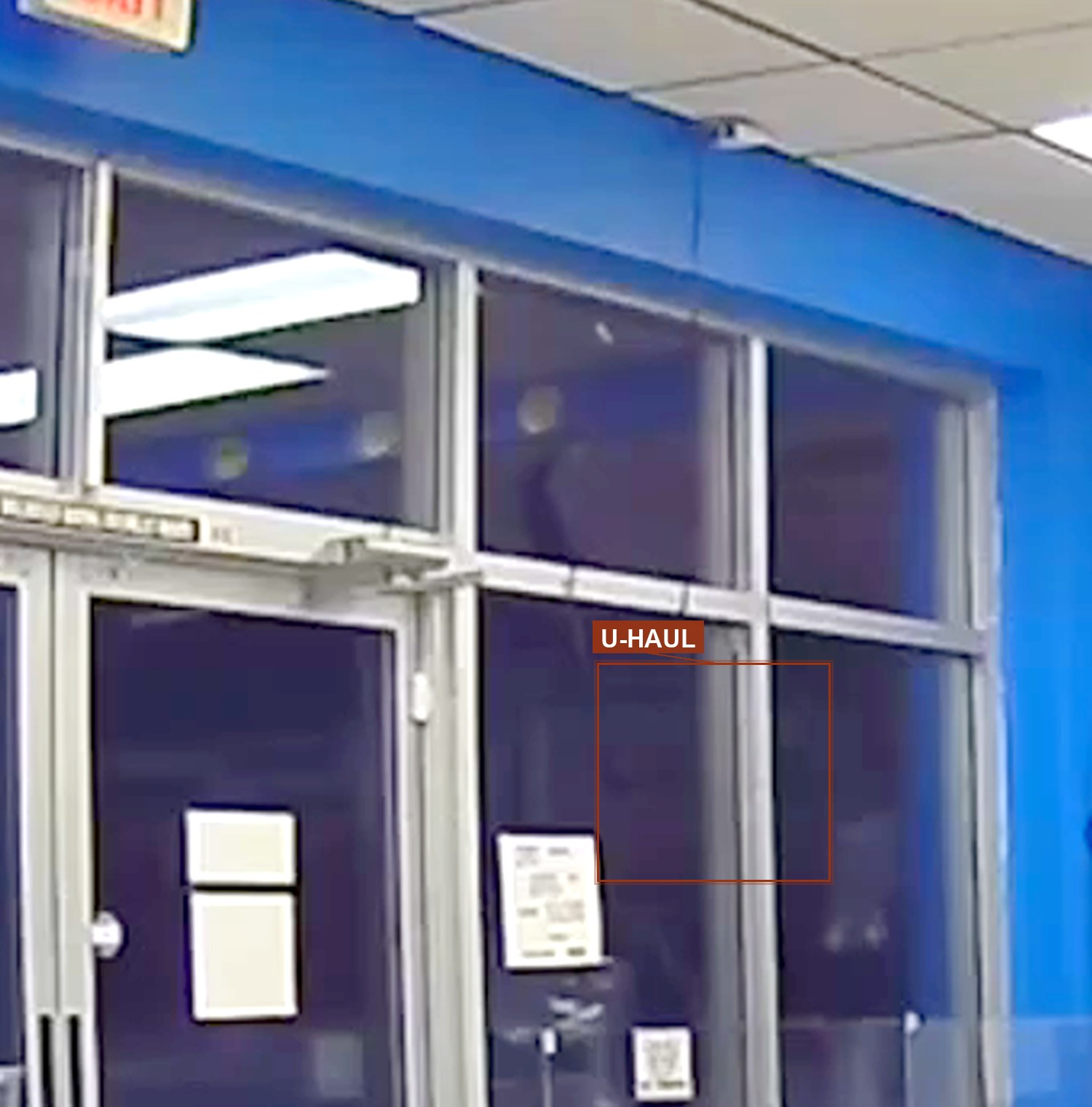
That truck is one of three U-Haul rentals now in the record, all out of Eugene lots, and the dates matter, so every truck on this page carries one: an admitted cargo run on October 24, 2024; the takeover-night truck of November 14, 2024; and a third rental going out at 12:19 AM on November 15, 2025, one year, almost to the minute, after the first came back. The first two are documented in The second U-Haul, the third in The third U-Haul. The witnesses carry their own dates too, and neither date is the takeover’s. In a public comment, the salon owner who shares a wall with the Eugene store described watching Brandon Best and staff unload a U-Haul into its back storage on the night of November 22, 2024, the date she and a client she cites both put on it. That matches none of the three rentals in the record: a fourth truck, so far without a receipt. Corroborated A former Eugene employee described Best turning up with a U-Haul from the Salem area full of Star Wars LEGO; he ties it to the takeover, BAM says it was the October 24 run, and the date is contested. Each sighting corroborates a truck at the Eugene store, not the night of the takeover; the camera frame above is what carries that night. Corroborated
The odometer is not in dispute, and this page has read it. The drop-off photograph shows 128,759 miles; the contract shows 128,573 at pickup; the difference is 186 miles, and the final bill reconciles to that figure to the cent. Confirmed A hundred and eighty-six miles is a full round trip to Salem and back, roughly 130 miles of highway plus another forty-odd of local driving, not a quick errand across town. Where the first edition of this page went too far was in treating the mileage as the whole case, because 186 miles is just as consistent with a cargo haul as with BAM’s own account of towing a camper to Salem. What actually defeats the camper account is not the distance but the equipment: contract 15284899 is a 15-foot box truck rented with no tow dolly, no transport, and no towing hardware of any kind, and a U-Haul box truck on a cutaway van chassis neither can nor is permitted to pull a travel trailer of that class. BAM’s claim that the pickup “wasn’t rated” but the box truck was is backwards. Refuted And the distance has a twin: BAM’s own admitted cargo run three weeks earlier, on October 24, covered about 180 miles on the same account and the same corridor, so by BAM’s own benchmark the November mileage matches a cargo haul, not a special trip. Confirmed on the receipts; what the truck carried remains an Inference. And BAM’s chief operating officer, Matt McNeff, first flatly denied there was any U-Haul, telling the investigator to check the store’s own cameras because he would find none, then reversed himself the next morning and admitted there had been one. The cameras he named are the cameras that caught it. ON THE RECORD Confirmed
The honest carve-out
Not everything that went missing is this. A separate block of LEGO that looked unaccounted for turned out to be Mansell’s own non-consigned duplicates, returned to him on a signed handover and sold privately. That part is not a theft, and we mark it so.
The sets did not arrive the way they left
The strip
On Mansell’s shelf the sets were boxed, wearing his sticker. On Best and Johnson’s storefront the same sets are built and boxless. Building a boxed set to sell it as used removes two things at once: the box, and the consignment sticker, the one mark of whose it was. The act of erasing the provenance is Confirmed; that it was done to conceal is an Inference the record does not settle. What it cost is measurable, in their own prices:
61 stripped sets →
The boxed copy sells higher on 179 of 251 sets they list both ways. This is a floor: it counts only packaging, not the far larger value of sets that never came back. BEST + JOHNSON’S STORE Corroborated
One specific collection
The copy-count fingerprint
A shop buying from walk-ins ends up with one or two of most sets. A single collection is lopsided, many copies of a few favorites. Mansell’s was, and so is what surfaced at Best and Johnson’s store.
Copies held of each set
consignment reconciliation · top of a 71-set tail
Thirty of one set, twenty-one of another, down a 71-set tail: the shape of one collection, not open-market stock. Corroborated
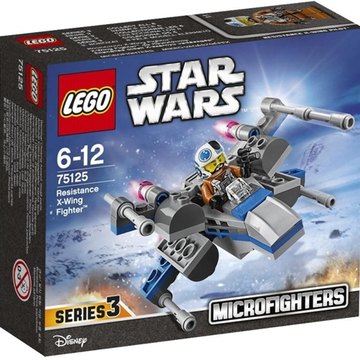 75125×30
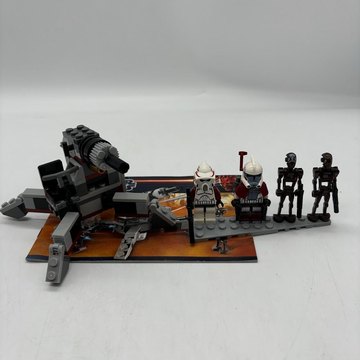 9488×21
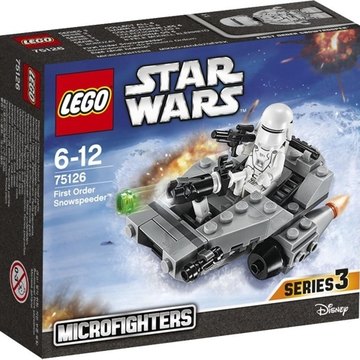 75126×19
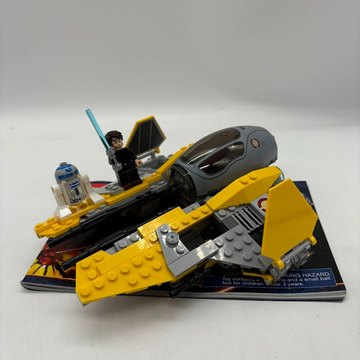 75038×12
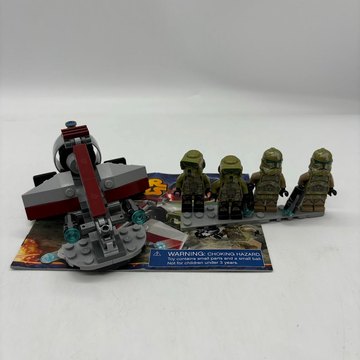 75035×10
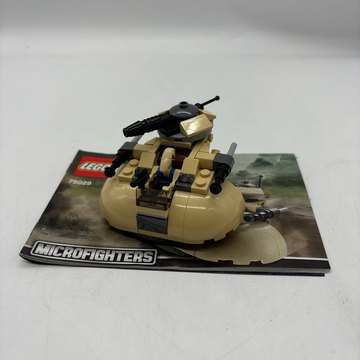 75029×10
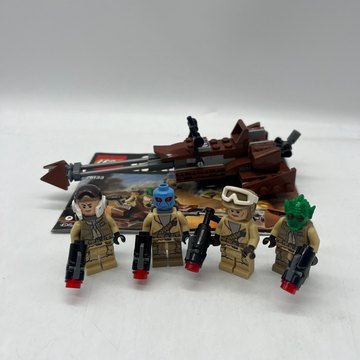 75133×10
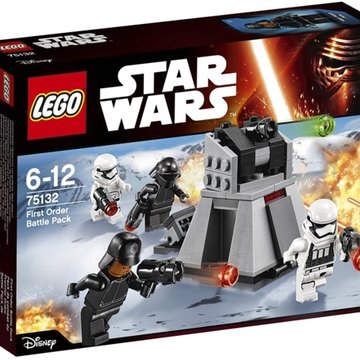 75132×9
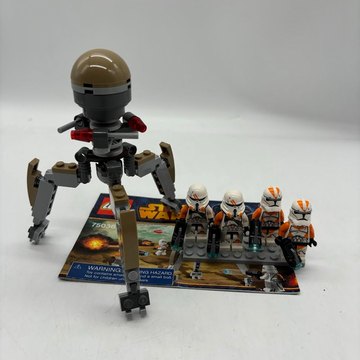 75036×8
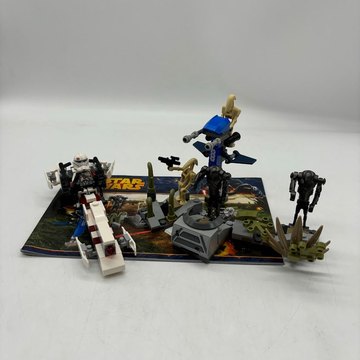 75037×8
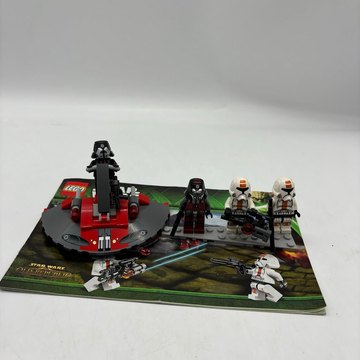 75001×8
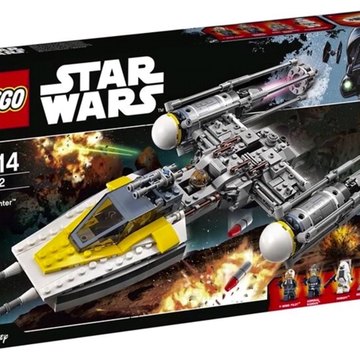 75172×8
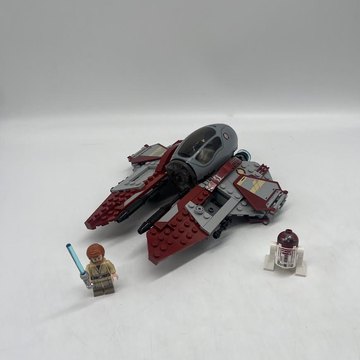 75135×7
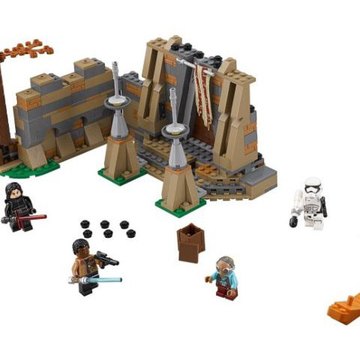 75139×6
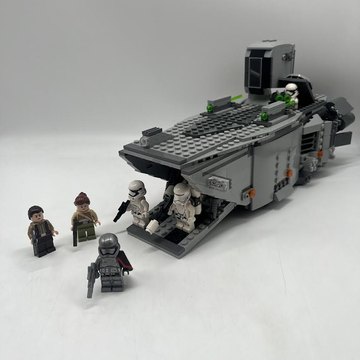 75103×6
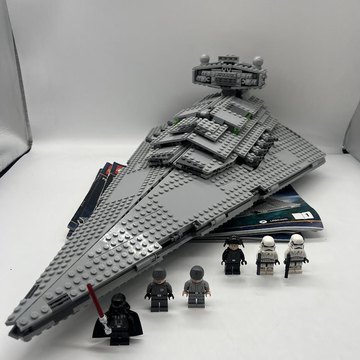 75055×6
 75155×6
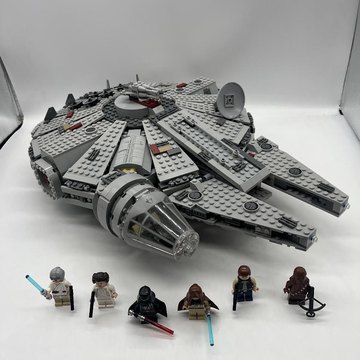 7965×6
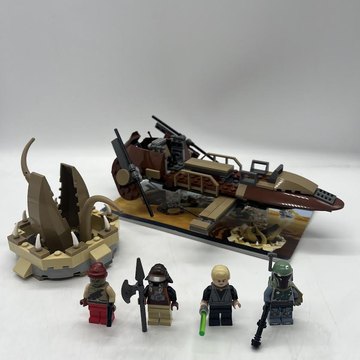 9496×6
 75086×6
BAM’s own paperwork agrees. Its own court-filed consignment agreement lists the collection on its Schedule I, and BAM’s own register reconciles it: 735 of Mansell’s copies, 339 sold for about $41,000, and 387 still unsold the night the store was taken. BAM’s own record admits it was holding and selling the Mansell collection. COURT RECORD · Consignment Agreement Confirmed
There is an innocent way to read a stack of duplicates: a store keeps several copies of a popular set and lists them one at a time as each sells. That is true, and it is beside the point. Listing habits explain why a shop has multiples. They do not explain why this shop’s multiples are Mansell’s multiples, set for set across seventy-two of them, or why two independent records agree on it: Best and Johnson’s own public catalog on one side, BAM’s own court-filed consignment ledger on the other. Walk-in buying leaves a store with one or two of many different sets. It does not hand it one named collection’s exact shape, twice. Corroborated
Where the collection went
Follow the value, not the volume
The collection was not uniform: a few sets worth thousands, most worth tens. Sort Mansell’s sets by value and ask Best and Johnson’s store which surfaced for sale and which vanished.
Share of each value tier that resurfaced
in Best & Johnson’s public catalog
The cheap and middle sets came back. The grails did not: zero of eight. Corroborated
Mansell’s Cloud City set, worth as much as $10,000, sits in the unsold column of BAM’s own ledger, and no copy tied to the seizure ever surfaced: on Best and Johnson’s own Eugene storefront the set is absent, and while the common version is stocked in a handful of the 134 stores in the chain, none was intake-dated to the seizure window and Mansell’s specific unsold copy turned up nowhere. Where the high end physically went is the open question, the one the transfer records would answer; the U-Haul receipts, public since, time the trips to the minute but do not name the cargo. Eugene storefront · seizure-dated sweep Corroborated on the absence · cause reserved
Why the missing high end is the sharpest question
The cheap sets are the noise. The missing high end is the question. A used-LEGO store can set a $30 battle pack on the shelf in broad daylight and nobody looks twice, which is why the low and middle tiers came back. The grails did not. Run the logic the other way: in an ordinary liquidation the flagships are the first thing you list, because they are where the money is, so their absence is the part that asks to be explained. And the sharpest version of that question does not rest on statistics at all. It rests on a single documented object. Mansell’s Cloud City, valued as high as $10,000, sits in the unsold column of BAM’s own ledger, and no copy tied to the seizure ever surfaced: it is absent from Best and Johnson’s own Eugene storefront, and while the common version is stocked in a few of the 134 stores, none was intake-dated to the seizure window and Mansell’s own copy appeared nowhere. That is not an inference about a distribution of prices, where a short cohort could plausibly come up empty at the top by chance. It is one named set, marked unsold by the plaintiffs’ own record, that no one can point to on the shelf where it belongs. The value did not evaporate. It is somewhere, and the one place the public record goes dark on where is the exact place the sealed records would speak: the transfer ledger. The truck receipts have since become public, and they time the trips without naming the cargo. That is why the top of the collection, not the bottom, is the part this page keeps returning to, and why the answer is under seal instead of in a catalog.
The high end of the Mansell collection is unaccounted for, absent from Best and Johnson’s own storefront with no seizure-dated copy anywhere in the chain, and the paper trail for where it went is sealed.
The answer to the headline
Brandon Best and Josh Johnson took it over
The seizure, the store the collection surfaced in, and the resale all trace to one pair, and BAM’s own sworn filings say who they are. The “independent third-party buyers” were on BAM’s payroll.
Confirmed on the certified Baker Bricks filing naming both men, and BAM’s own disclosure listing Johnson as its recruiter. Whether the strip was meant to launder the collection stays an Inference: the record proves who, what, and when, and reserves the why.
BAM knew how to do it in the open
The Canby control
None of this is how a store sale has to look, and BAM proved it. Nine months earlier it sold another store, in Canby, to an outside family for $150,000, disclosed the sale in its franchise filing, and booked the gain. It knew how to report a store changing hands. For the Keizer store, sold to Best and Johnson, its own inspector and its own recruiter, the disclosure is simply not there: no reacquired outlet, no sale to a franchisee, no related-party footnote. COURT RECORD · FDD Confirmed
Then Johnson called the police on Schneider
The tell
When Ben Schneider, a YouTube journalist, began documenting the seized collection, the response was not a lawyer’s letter. Josh Johnson, the recruiter who bought the store, filed a police report. A Provo detective then obtained a secret warrant for Schneider’s Google account and location history on a theory of extortion, a theory the prosecutor never charged, dropping it to two misdemeanors. You do not run a critic through the criminal system over a civil dispute unless the reporting landed. COURT RECORD Confirmed · the full warrant story →
Check the math yourself
The data, and how to redo it
Nothing here asks for your trust. Every figure is computed from Best and Johnson’s own public store catalog and the court’s own filed exhibits. The full dataset and the scripts that produce each number are posted, so the whole investigation can be rebuilt from scratch.
The Eugene catalog scrape (every product, server-timestamped), the reconciliation tables, and the Python that produces every figure here. Re-run it and you get these numbers.
The two-day burst
From the scrape and poisson_scan.csv: keep the used Star Wars stratum, group by creation day, count each two-day window. Baseline ~0.58 per window. Dec 23–24: 23, of which 13 match Mansell’s set list. p is the Poisson upper tail, corrected over all 586 windows.
The un-forgeable clock
From the scrape: sort all 14,749 products by the server’s monotonic id and count every time created_at drops below the prior row. Count is 0.
The strip cost, ~$2,112
From boxed_boxless_spread.csv: median boxed-vs-boxless gap (10%, boxed higher on 179 of 251), applied to Mansell’s stripped sets.
The tiers & missing grails
Bucket Mansell’s sets by value; per bucket count how many surfaced. Flagship: 0 of 8. Mansell’s matched grail units then queried against all 134 stores’ live inventory: no copy tied to the seizure surfaced, and on Best and Johnson’s own Eugene storefront the flagships are absent.
The register reconciliation that splits the consigned ledger into 339 sold and 387 unsold comes from the independent workbooks by the analysts Collin and Bubba, cited rather than re-hosted. The consignment agreement itself is linked above.
Where we told ourselves no
Discipline cuts both ways. Batch-listing a collection is normal, a sibling store batches Star Wars more than Best and Johnson’s does, so the drop proves the collection moved as a unit, not that moving it was a crime. A store-wide timestamp we first flagged was a software artifact, thrown out. A photo-matching test came back empty, because the boxes were built away. Those are Refuted, and they are why the rest can be trusted. One more, from this very page. The first edition rested the U-Haul on the odometer alone and put the trip at roughly 130 miles; the confirmed figure is in fact higher, 186 miles, but distance by itself cannot tell a cargo run from the camper tow BAM describes, so the section above now anchors the point where it actually holds, on the equipment the truck did not carry and on the identical length of BAM’s own admitted cargo run. The reading stands; the argument is sharper.
How we know everything · sources
Law/Gorman photos: the seizure-night photographs taken by the store’s operators, Chrystal Law and Benjamin Gorman, phone timestamps in each frame (Nov 14, 2024, 7:54–7:55 PM). Bryan Mansell and his family were not present that night; the collection in the frames is the one Mansell consigned.
Best and Johnson’s catalog: their own public Bricks & Minifigs Eugene product feed, every item server-timestamped; every count, the drop, the fingerprint, the prices, and the tiers are computed from it and re-runnable.
The 134-store sweep: the chain’s own public inventory system, queried store by store for copies tied to the seizure window; the common set appears in a handful of stores, none intake-dated to the seizure.
The U-Hauls: the Keizer store’s storefront-camera frame from the night of November 14, 2024, COO Matt McNeff’s on-record denial-and-reversal, and CEO Ammon McNeff’s account of the takeover morning, all from the Coffeezilla broadcast “I Found The $200,000 Missing Lego” (June 10, 2026); Brandon Best’s three rental records, October 24, 2024, November 14, 2024 (contract 15284899, out 10:17 AM, 186 miles), and November 15, 2025, detailed in The second U-Haul and The third U-Haul; and two dated witness accounts at the Eugene store, the neighboring salon owner’s public comment (November 22, 2024) and the former employee’s account to Coffeezilla (date contested).
The court record: BAM’s verified complaint and exhibits (incl. the consignment agreement); the certified Baker Bricks LLC filing naming both men; the Oregon and Florida registries; BAM’s 2026 franchise disclosure; the Provo search warrant.
Presumption of innocence throughout. The record proves that Best and Johnson took the store, that the Mansell collection moved into their store, and that its provenance was destroyed; it reserves intent.