The Mormon Church settled SEC charges over a hidden $32 billion. The “clandestine hedge fund” broadcast, checked against the record.
VERIFICATION AUDITThe May 14, 2023 CBS 60 Minutes segment on Ensign Peak Advisors, the investment arm of the Church of Jesus Christ of Latter-day Saints, checked claim by claim against the federal order, the court record, the statutes, and the filings that exist. Every verdict links the document behind it.
Scope. This update stands alone. It applies the site’s verification method to one widely viewed broadcast about one institution’s finances. It is unrelated to the franchise dispute documented elsewhere on this site, and nothing in it connects the two.
On May 14, 2023, 60 Minutes aired a thirteen-minute segment by correspondent Sharyn Alfonsi on Ensign Peak Advisors, the firm that manages the investment reserves of the Church of Jesus Christ of Latter-day Saints. Its named sources: David Nielsen, a former senior portfolio manager at the firm turned IRS whistleblower; Bishop Christopher Waddell, answering for the church on camera; and Philip Hackney, a tax law professor formerly of the IRS. The segment is posted just below and has drawn more than three million views. This page does three things with it: explains the story it tells, states why that story matters, and then audits it, claim by claim, against specific public documents, the same method this site applies to any public statement it examines. Two things set this audit apart from an ordinary fact-check. First, much of the record that can test the broadcast accumulated only after it aired. Second, the deepest finding is not any single verdict but a boundary line: where the checking stops, it stops because the filing that would answer the question is not required to exist.
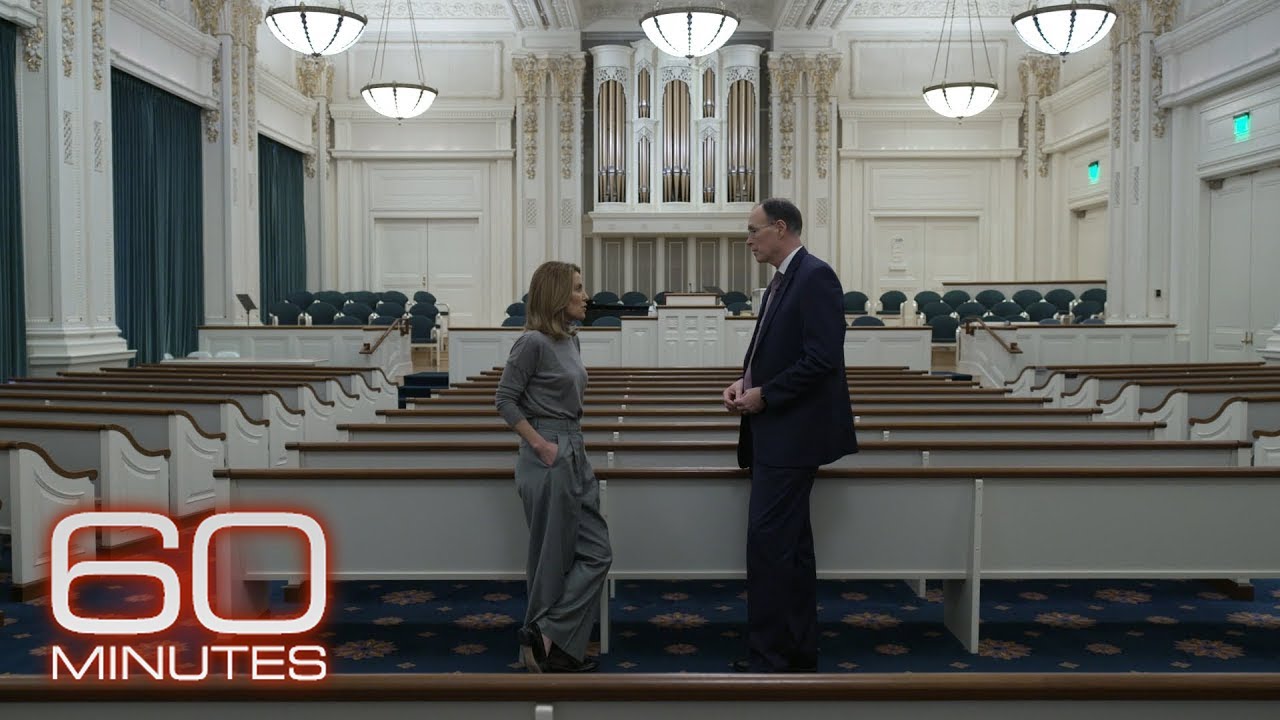
The segment as posted by 60 Minutes on YouTube; the title is CBS’s. It opens in a new tab, and every verdict in the audit below links back to its timestamp in this video, so each claim can be heard in place before reading how it checks out.
The story the segment tells
Ensign Peak Advisors is the investment arm of the Church of Jesus Christ of Latter-day Saints, created in 1997 and seeded, by the SEC’s account, with approximately $7 billion. The church asks its members for ten percent of their income, and the segment reports an estimated $7 billion a year arriving from 17 million members, with roughly a billion a year left over after the church’s operating costs. The surplus goes to Ensign Peak and compounds, largely untaxed. By the whistleblower’s account, the fund passed $100 billion by 2019. No outsider can confirm the total, then or now, because the one document every comparable charity files each year, an annual information return, is a document churches are not required to file at all.
David Nielsen ran money at the firm from 2009 until 2019, a senior portfolio manager recruited from Wall Street. He tells 60 Minutes he thought he was going to work for a charity and instead found, in his words, “a clandestine hedge fund”: once the money went in, it did not go out. The exceptions he describes surfaced in 2013, when, he says, one of his bosses shared a document at a meeting showing $1.4 billion going toward the City Creek Center mall project in downtown Salt Lake City and $600 million propping up Beneficial Life, a church-owned insurance company damaged in the financial crisis. He resigned in 2019 and filed a whistleblower complaint with the IRS. His brother shared it with the Washington Post, and the fund’s existence at that scale became public for the first time.
The concealment machinery is the part the government later wrote down. In May 2018, a website had connected a set of obscure securities filers to the church; inside the firm, Nielsen says, the internal explanation was blunt: “these entities were to hide the assets from the members.” In February 2023, three months before the segment aired, the SEC settled with the fund and the church over exactly that structure: thirteen LLCs created for the sole purpose of preventing public disclosure, nominee signers chosen for common names, phone lines that went straight to voicemail, $5 million in penalties, findings consented to without admission. How faithfully the broadcast reported that order is the first thing the audit below checks.
The church’s answer, delivered on camera by Bishop Waddell, does not dispute the transfers; it disputes what they mean. The reserve exists, he says, for “the continuing operation” of the church “and for the future.” The mall money was an investment. The insurer has, he says, paid most of the bailout back. Money moves from the fund to the church routinely, and the church reports spending more than a billion dollars a year on humanitarian aid. Asked the fund’s value, he would not give a number. Asked about secrecy, he gave the segment its definitive sentence; the audit opens with it.
Why it matters, and why it is on this site
The stakes are not small. This is a pool of money with, by any published estimate, no known peer among American religious funds, built from donations given under a religious obligation, and it reports to no one: no annual return, no audit an outsider can read, no register on which it appears. And for roughly two decades, by the government’s account, the arrangement was not merely private but engineered against disclosure, and the engineering held until a website, an insider, and a regulator ended it. No law would have surfaced any of it on its own; Congress has so far left that where it lies. For more than three million viewers, this segment is the only account of the arrangement they have ever seen.
A broadcast is also a snapshot, and the record kept moving after the cameras stopped. The biggest question the segment left open, whose money built the mall, was answered twenty months later by a unanimous en banc federal appeals court, in the church’s favor. The fund’s compelled quarterly disclosures kept accumulating. The IRS complaint that started everything has produced nothing public in the nearly seven years since it was filed. Three million people saw the 2023 snapshot; the platforms that served it to them never served the 2025 ruling. Re-auditing the segment now is the correction layer a broadcast never ships.
And the reason it is here. The subject of this site, on every page, is a craft: how corporate paper can be arranged so that the records people rely on stop describing reality, and what compelled documents can force back into view. The Ensign Peak order is the most completely documented specimen of that craft in the American record: thirteen entities built, in a federal order’s words, for the sole purpose of preventing public disclosure, signed by people chosen to be hard to find, reachable at a phone line built to be unanswered. The parties have nothing to do with one another; the craft is the same subject. The audit also serves a narrower purpose: the site’s method, put a statement against the records and grade the distance, is applied here to a story in which this site has no party and no source, so a reader can watch the instrument work. The verdicts below include true, half right, untestable, and decided in the accused institution’s favor. That spread is what the instrument looks like when it is not steering.
ASSERTED their words, on camera
“Well, we don’t feel it’s being secret. We feel it’s being confidential.”
Bishop Christopher Waddell, one of the three bishops who oversee the church’s finances, to 60 Minutes, May 2023
Take the distinction seriously, because everything below turns on it. A confidential record exists and is withheld; the question a verification audit can answer is how the claims made about that record fare against the documents that do exist. Three years after the broadcast aired, more of those documents exist than at any point before it: a federal consent order, a unanimous en banc appellate ruling, the fund’s own public tax returns, and the church’s own written statements. This page checks the broadcast against all of them, in both directions.
The fund, by the numbers
“the value of its investments ballooned past 100 billion dollars”
No public document states the fund’s total, and the church has never published one. On camera, asked whether $150 billion sounded correct, Bishop Waddell answered: “that’s an estimate that some have made,” and then, “we have significant resources.” What the record does hold is a set of floors and waypoints. The SEC’s order recites that the fund managed approximately $7 billion at its inception in 1997, that the concealed portfolio had grown to approximately $32 billion by 2018, and that its reportable securities alone reached approximately $37.8 billion by 2020. The $100 billion figure itself comes from the whistleblower’s account of internal records, and the Wall Street Journal reached the same number in February 2020 in a story built on interviews with the fund’s own leadership, under the headline “The Mormon Church Amassed $100 Billion.” Consistent internal accounts, reported to the dollar nowhere.
“twice the size of Harvard’s endowment or the Bill and Melinda Gates Foundation”
Checked against each institution’s own numbers as they stood the week the segment aired. Harvard’s endowment: $50.9 billion for fiscal 2022, by Harvard’s own published figure, so “twice” holds at $100 billion. The Gates Foundation’s endowment: $67.3 billion as of December 31, 2022, by the foundation’s own fact sheet as archived the day the segment aired, which makes a $100 billion fund about one and a half times its size, not twice. The comparison was true of the Gates trust when the whistleblower’s complaint was filed in 2019; the foundation’s endowment had grown since. A garnish claim, and the only arithmetic in the segment that fails.
Harvard, its own endowment page · Gates Foundation fact sheet, May 14, 2023 capture
“every year the church collects an estimated 7 billion dollars in contributions from its 17 million members”
The 17 million is the church’s own statistic, from its annual statistical report. The $7 billion in annual contributions, and the “about a billion dollars a year” of surplus the segment says flows into the reserve, are the whistleblower’s figures, and the broadcast labels them as estimates on air. The church has never published either number, and no filing requires it to. The segment handled the uncertainty the way it should be handled: it said “estimated.”
“because Ensign Peak is registered as a non-profit it all grows tax-free”
The broad point stands: investment income of a church-affiliated nonprofit is largely exempt from federal income tax. The word “all” is the overreach. Ensign Peak files a public federal return, Form 990-T, for the slice of its income the law treats as unrelated business income, and it pays tax on that slice: for 2019, its own return reported roughly $84.4 million of gross unrelated business income and $17,242,385 in tax. The return is public even though the church files no other annual disclosure, and it is the one recurring number the fund reports to anyone. A broadcast about a fund that files nothing missed the one thing it files.
Ensign Peak’s Form 990-T filings, EIN 84-1432969, via ProPublica
What the broadcast said the SEC found
“SEC investigators found the church went to great lengths to hide 32 billion dollars in securities over nearly 20 years”
Each piece of that sentence has a government source. “Went to great lengths” is the SEC enforcement director’s own phrase from the announcement: the church’s investment manager, “with the Church’s knowledge, went to great lengths to avoid disclosing the Church’s investments.” The $32 billion is the SEC’s figure for the portfolio “which by 2018 grew to approximately $32 billion.” One point of posture: the findings were consented to, not admitted; both respondents settled “without admitting or denying the findings.” And “nearly 20 years” is the one number the broadcast got wrong in the church’s favor. The order’s own span is longer: the failure to file ran “from 1997 through 2019.”
SEC order, summary and ¶33 · SEC release 2023-35, Feb. 21, 2023 · the broadcast at 8:40
“it created 13 shell companies that were assigned a local phone number that would go directly to voicemail in case regulators checked in”
Thirteen LLCs is the order’s count, created “for the sole purpose of filing Forms 13F and preventing public disclosure” of the church’s holdings. The phone detail is paragraph 24, nearly verbatim: “Each Clone LLC was also assigned a local phone number that would go directly to voicemail.” The order then goes further than the broadcast did: a senior manager at the fund instructed that voicemails from regulators be flagged to him, “but to delete all others.” The order also finds the LLCs were given out-of-state addresses where no business occurred, chosen “to create the impression” of nationwide operations and make the entities harder to trace.
“back office accountants who had never bought a bond or sold a stock a day in their life, signing signatory pages”
That is the whistleblower speaking, and the order’s findings match him. Each shell had a “Business Manager,” most of them church employees, who “performed no functions for the Clone LLCs outside of signing the Form 13F signature pages each quarter.” The order adds a fact the broadcast left out: the signers “were selected because they had common names and a limited presence on social media,” making them harder to connect to the fund or the church.
“any firm with more than a hundred million dollars in securities must file accurate reports… the SEC fined the church and Ensign Peak a total of five million dollars”
The threshold is Rule 13f-1: an institutional investment manager exercising discretion over $100 million or more in reportable securities files quarterly. The order finds the fund’s senior management knew of the requirement “by at least 1998” and communicated it to the church’s senior leadership. The penalty is exactly as aired: $4 million against Ensign Peak, $1 million against the church, $5 million total, paid to the U.S. Treasury.
“Bishop Christopher Waddell told us it was the church’s lawyers who advised them to create the shell companies”
The church put the same position in writing the day the settlement was announced. Its published question-and-answer: “The Church’s senior leadership received and relied upon legal counsel when it approved of the use of the external companies to make the filings.” The same statement closed the matter in the church’s own words: “We affirm our commitment to comply with the law, regret mistakes made, and now consider this matter closed.” The order adds what the advice-of-counsel framing leaves out. The recommendations to create the filers and to clone them came from Ensign Peak and were approved by the church’s senior leadership. The church’s own audit department reviewed the LLC structure twice, in 2014 and in 2017, and “highlighted the risk that the SEC might disagree with the approach”; the filing approach continued unchanged. By the church’s own account, it was adjusted in June 2019, when the SEC first expressed concern. The structure did not survive scrutiny; it survived until scrutiny.
Church statement on the SEC settlement, Feb. 21, 2023, archived capture · SEC order, ¶¶9, 13-16
The mall and the insurance company
“1.4 billion dollars from the fund went to a mall… and 600 million dollars was used to prop up a for-profit church-owned insurance company called Beneficial Life”
Both outflows the whistleblower’s 2013 document described are conceded by the church itself. On the insurer, Bishop Waddell on camera: “the church had the resources to bail out Beneficial Life during the financial crisis 2008-2009.” On the mall: “oh absolutely, yeah, it was an investment.” The $1.4 billion figure is also in the court record in the church’s own papers: its declaration in the Huntsman litigation states that “approximately $1.4 billion was appropriated for the City Creek project.” What the transfers mean for the fund’s tax status is a contested legal question the broadcast aired as one, through a credentialed expert calling it “a gray area.” The transfers themselves are not in dispute.
Huntsman en banc opinion, the church’s funding declarations · the exchange at 6:21
The question the segment left open, whose money built the mall, was answered after air, by a court.
When the segment aired, a lawsuit claiming the church misrepresented the source of the City Creek money was alive in the Ninth Circuit. It ended on January 31, 2025: all eleven judges of the en banc court affirmed judgment for the church, holding that “no reasonable juror could conclude that the Church misrepresented the source of funds for the City Creek project.” The reason turns on a distinction the church had drawn since announcing the project in 2003, when its president said “tithing funds have not and will not be used” and pointed instead to church commercial entities and “the earnings of invested reserve funds.” Ensign Peak held both tithing principal and earnings on it; the court found the church’s statements about using earnings were not shown false. The majority decided the case on ordinary fraud grounds and said the church autonomy doctrine “had no bearing” on the analysis. The broadcast could not have reported this. A viewer who saw it in 2023 and never looked again would not know it.
Huntsman v. Corp. of the President, No. 21-56056 (9th Cir. Jan. 31, 2025) (en banc), hosted copy · the court’s copy
The people, the process, and the statutes
“David Nielsen was a senior portfolio manager… he resigned in 2019 and filed a… whistleblower complaint with the Internal Revenue Service”
The church disputed Nielsen’s conclusions on camera, not his employment or his complaint. The Ninth Circuit’s en banc opinion recites both as background fact: Nielsen was “a former portfolio manager at Ensign Peak” whose IRS complaint alleged the fund’s money went to commercial ventures. The complaint became public in December 2019 when his brother shared it with the Washington Post, which is also how the broadcast described it.
Huntsman en banc opinion, background recitals · Washington Post, Dec. 17, 2019
“a website called MormonLeaks linked church members to companies that existed only on paper” and the emergency meeting that followed
The 2018 exposure is in the order: “In May 2018, a public website reported that various entities that appeared to have ties to the Church had filed Forms 13F revealing holdings of approximately $32 billion.” The meeting-room quotes that follow in the segment, “these entities were to hide the assets from the members” and “Dave, we’re going to lose our tax exempt status,” are the whistleblower’s recollection, single-source and uncorroborated as quotations. What the record independently establishes is the substance behind them: the order finds the shells existed “for the sole purpose of… preventing public disclosure,” and that the church’s concern was that disclosure “would lead to negative consequences.” The words are his; the concealment purpose is the government’s finding.
“Phil Hackney worked in the office of Chief Counsel of the IRS” and the payout math he laid out
His University of Pittsburgh faculty biography confirms five years at the IRS Office of the Chief Counsel in Washington. The 5 percent minimum payout he cited for private foundations is the statute, 26 U.S.C. 4942; his statement that no such number binds public charities or churches is likewise the state of the law, and his “two, three percent” expectation was aired as his opinion. The closing claim, that a vindicated whistleblower “could be rewarded with up to 30 percent of what’s collected,” is the whistleblower-award statute, 26 U.S.C. 7623(b): 15 to 30 percent of collected proceeds.
What no public record can test
“never used for any charitable purpose… the whole time I was there” versus “an average of nine transfers” a month
This is the segment’s central dispute, and no public document can arbitrate it. The whistleblower, carefully qualified on air: the fund’s money was never used for any charitable purpose, “to my knowledge,” during his tenure. The bishop, equally specific: money moves from Ensign Peak back to the church routinely, “an average of nine transfers” in a given month, funding operations and humanitarian work. A charity of this size would ordinarily file an annual return, Form 990, listing what went out the door and to whom. Churches and their integrated auxiliaries are exempt from filing it at all, under 26 U.S.C. 6033(a)(3). The broadcast said religious organizations “don’t have to fully disclose all financial information to the IRS,” which is an understatement: no annual information return is required whatsoever. Both men could be describing the same fund accurately from where each stood. One asymmetry is worth stating plainly: only one side of this dispute holds the ledger that would settle it, and that side quotes the ledger while keeping it. There is no filing to check.
“Waddell says the insurance company has paid back most of the bailout money”
The broadcast attached the caveat itself: “the church would not disclose the details of that deal or the mall investment.” Three years on, no public filing has tested the repayment claim, and none is required to exist. It stands as an attributed statement about withheld books.
“the largest treasure held by any religious fund in America”
Possibly true, and unprovable as stated: American religious funds report their size to no one, so there is no roster on which to place anyone first. The claim’s unverifiability is not a flaw in the reporting so much as a restatement of the segment’s subject. The only reason the question has no answer is the same exemption the segment spent thirteen minutes describing.
Since the broadcast
The honest boundary. Three limits on the record, stated once. The SEC’s findings were consented to, not admitted, and they concern disclosure, not theft of any member’s donation. The one claim about the church’s public statements that reached a courtroom ended with eleven federal judges holding no reasonable juror could find a misrepresentation about the mall’s funding. And the central charity-use dispute is untestable in either direction, because the filing that would settle it is not required to exist. None of those limits reaches the conduct that is established: the thirteen entities, their sole documented purpose, the tradecraft, the internal audit warnings, and the twenty-two years of non-filing all stand in a federal order the church and its fund consented to, and in the church’s own written words. This page checks a broadcast against documents; it takes no position on questions the documents cannot reach. It is general information about public records, not legal or tax advice.
Sources, public and linked or hosted in full: the 60 Minutes segment (CBS News, aired May 14, 2023); the SEC’s order instituting cease-and-desist proceedings, In the Matter of Ensign Peak Advisors, Inc., and The Church of Jesus Christ of Latter-day Saints, Admin. Proc. File No. 3-21306, Exchange Act Release No. 96951 (Feb. 21, 2023), announced in SEC release 2023-35 (sec.gov blocks automated retrieval, so the order is hosted here); the Ninth Circuit’s en banc opinion in Huntsman v. Corporation of the President, No. 21-56056 (Jan. 31, 2025), also at the court’s site; Ensign Peak’s Form 990-T filings (ProPublica Nonprofit Explorer, EIN 84-1432969) and its quarterly 13F filings (SEC EDGAR, CIK 0001454984); the church’s statement on the SEC settlement (newsroom, Feb. 21, 2023, archived capture) and its annual statistical and “Caring for Those in Need” reports, cited by name; Harvard’s endowment page and the Gates Foundation fact sheet as archived at air date; statutes and rules at Cornell’s Legal Information Institute; the Washington Post (Dec. 17, 2019) and the Wall Street Journal (Feb. 8, 2020), cited by name behind their paywalls.
The BAM Map is independent reporting on matters of public concern. Nothing here is a finding of any person’s guilt; the criminal charges referenced are unadjudicated and every defendant is presumed innocent. Sources are linked so readers can check the record. · Home · Map · The law · Bodycam