BAM pledged everything it owns to Hillcrest Bank in February, then certified a disclosure document that never mentions it. By May 31 it owed the bank $378,884.70.
On February 24, 2026 a financing statement was filed in Delaware giving Hillcrest Bank, a division of NBH Bank, a lien on all of BAM Franchising’s inventory, equipment, accounts, bank deposits, contracts, intangibles and goodwill, present and future. The disclosure document BAM issued on April 8 and certified on April 17 does not name the bank. The first BAM paper that does is the September amendment, whose May 31 balance sheet shows $378,884.70 drawn on a Hillcrest line, and $568,188.43 on three lines, against $130,779 at the year end. Five days before the lien, the chief executive put a $300,000 line of credit on his house. Everything on this page is public.
PRIMARY SOURCEDelaware financing statement no. 20261497433 of February 24, 2026, amendment no. 20267142793 of August 31 and the state’s certificate no. 20269848913 of October 15; Utah County Recorder entry 15484:2026; Utah financing statements no. 2504171138883-7 (2025), no. 210216749881-3 (2021) and no. 2023970648-7 (2023), with the Division’s reports of June 2, 2026; BAM’s disclosure documents of April and September 2026 as filed with Minnesota and Wisconsin. Every one is served below. All public.
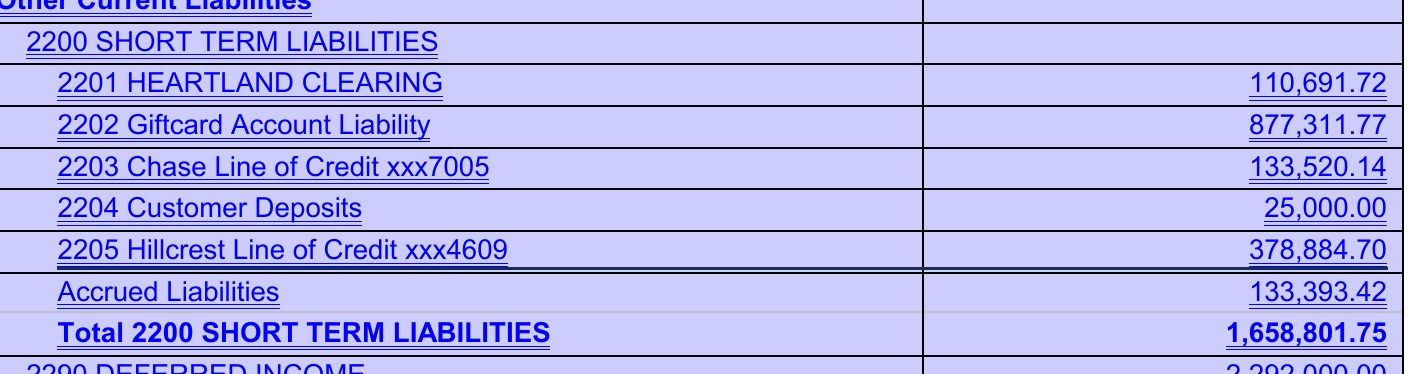
CONFIRMEDThe $378,884.70 is BAM’s own figure, on the balance sheet dated May 31, 2026 in the amendment it certified to Minnesota on September 9, beside a Chase line at $133,520.14 and a Shopify line at $55,783.59.
CONFIRMEDThe house is the chief executive’s. The deed names Ammon McNeff and Nicole Fernuik McNeff on Utah County parcel 55:333:0014, the parcel this site identified in July as his residence. The street address is masked here, as on every page of this site.
A bank now has first claim on everything BAM owns
At 5:38 p.m. Eastern on February 24, 2026, Wolters Kluwer’s lien service filed financing statement no. 20261497433 with the Delaware Department of State for “HILLCREST BANK, A DIVISION OF NBH BANK.” The debtor is “BAM FRANCHISING, INC.” of Provo, a Delaware corporation since 2023, which is why the filing sits in Delaware and not in Utah. The bank’s Kansas City address on the form is its division’s; Hillcrest has banked in Utah since NBH sent it into the state in 2019 “with a focus on serving commercial and business banking clients in the Wasatch Front” (its announcement).
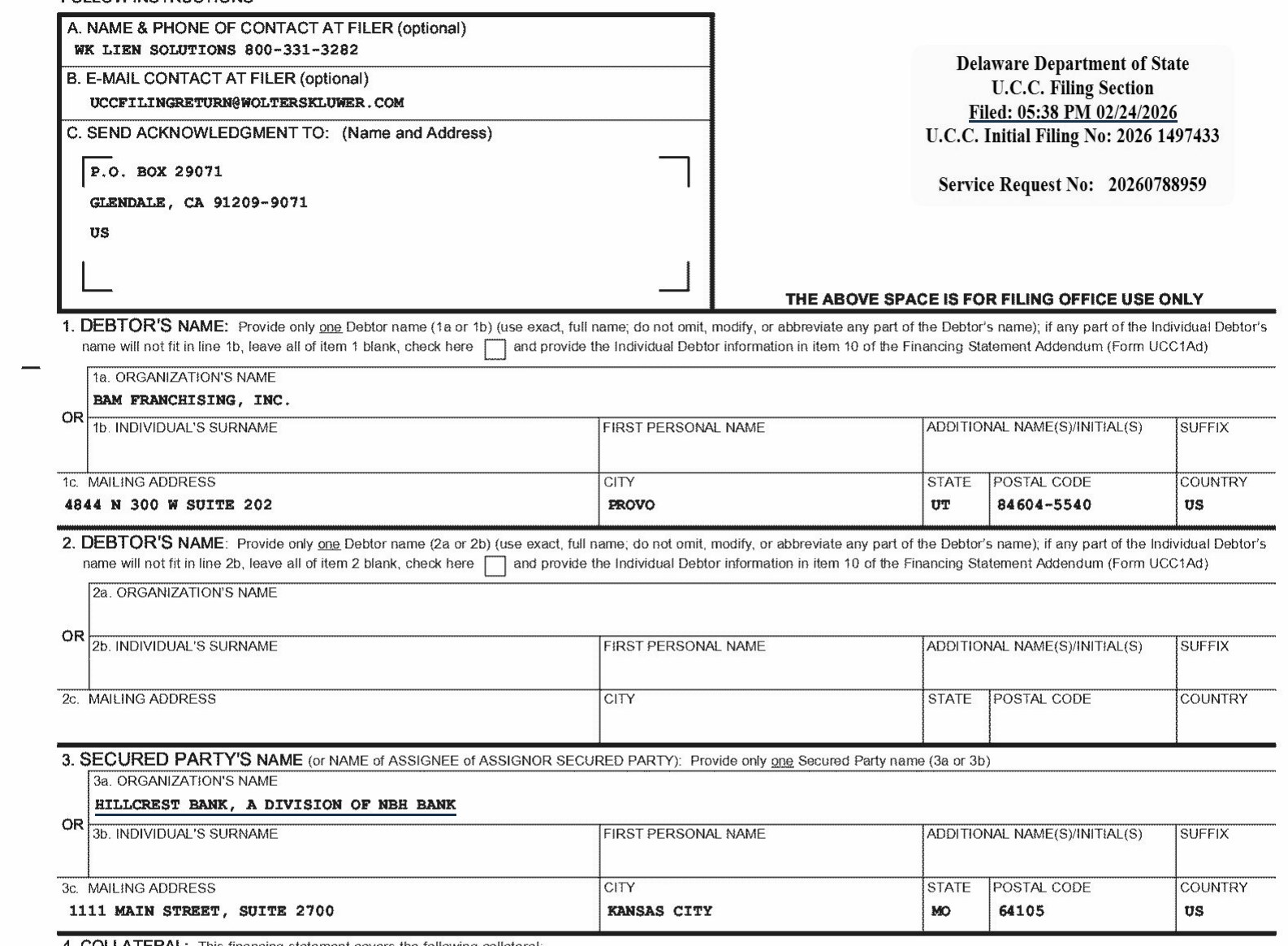
The collateral, in the filing’s words:
All inventory, machinery and equipment, accounts and accounts receivable (including but not limited to all health-care-insurance receivables), chattel paper, instruments (including but not limited to all promissory notes), letters of credit rights, letters of credit, documents, deposits, deposit accounts, investment property, money, contract rights, other rights to payment and performance, and general intangibles (including but not limited to all software and all payment intangibles); all furniture; all fixtures; all attachments, accessions, accessories, fittings, increases, tools, parts, repairs, supplies, and commingled goods relating to the foregoing property, and all additions, replacements of and substitutions for all or any part of the foregoing property; all insurance refunds relating to the foregoing property; all good will relating to the foregoing property; all records and data and embedded software relating to the foregoing property, and all equipment, inventory, and software to utilize, create, maintain and process any such records and data on electronic media; and all supporting obligations relating to the foregoing property; all whether now existing or hereafter arising, whether now owned or hereafter acquired or whether now or hereafter subject to any rights in the foregoing property; all products and proceeds (including but not limited to all insurance payments or condemnation proceeds) of or relating to the foregoing property; and all rents, profit, income, and other proceeds
and payments of estimated taxes, insurance premiums and other common area maintenance or similar receivables.
In plain words: the royalties and fees franchisees owe BAM, the money in its bank accounts, its contracts, its software, its furniture and the goodwill of the business, whatever it owns now and whatever it acquires later. BAM owns no land. The filing does not name the trademarks; four months later, on June 30, BAM moved all thirteen of them to a separate company (September 25).
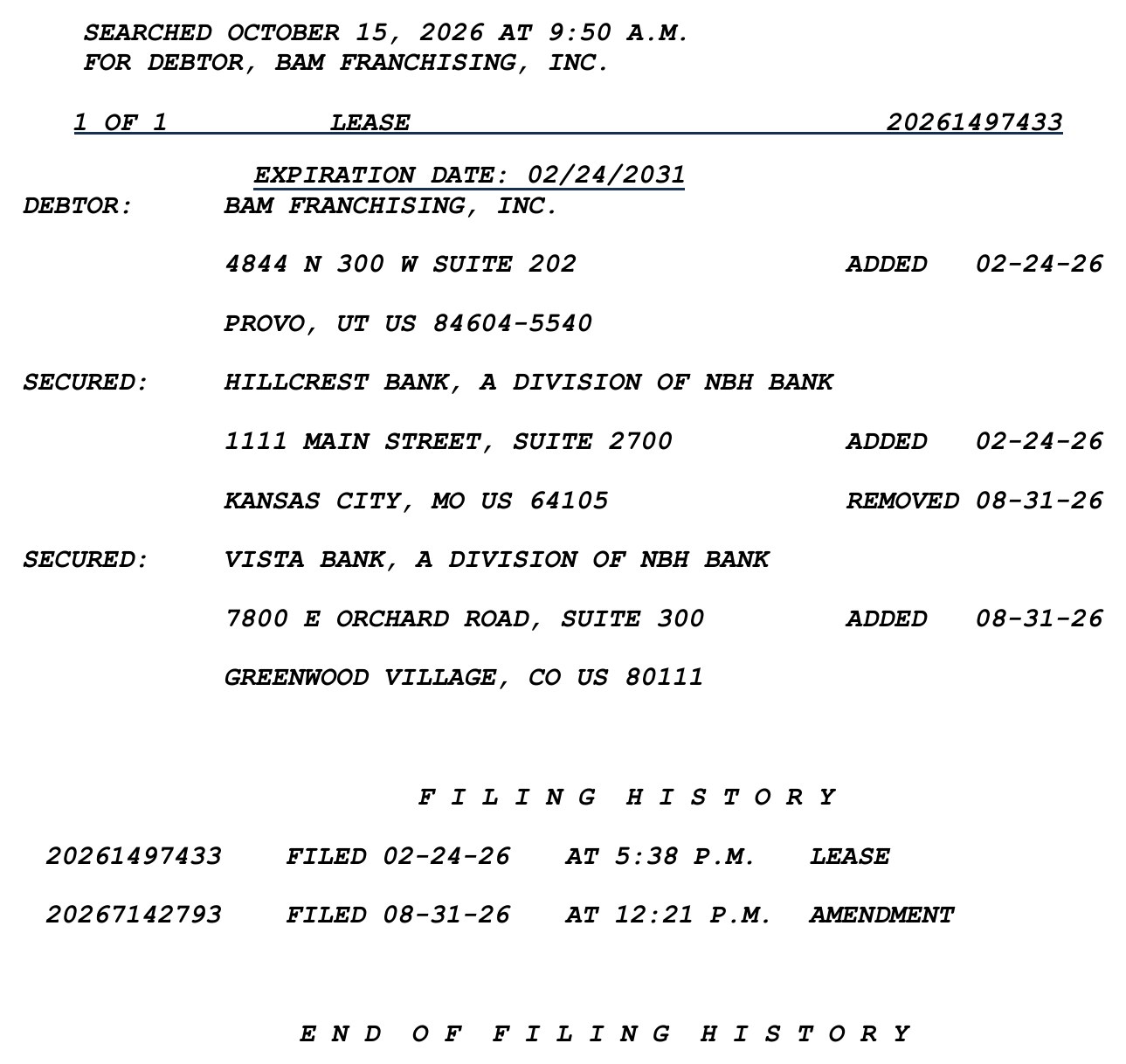
Delaware’s index lists the filing’s type as “LEASE,” because the bank’s agent ticked the box marked “Lessee/Lessor.” The collateral description names no lease. The filing expires on February 24, 2031.
On August 31, by amendment no. 20267142793, the bank changed its own name on the filing to “VISTA BANK, A DIVISION OF NBH BANK”; Hillcrest’s site now says “Hillcrest is now Vista Bank.” The collateral did not change.
On October 15 the Delaware Division of Corporations certified, in certificate no. 20269848913, that this is the only financing statement, federal tax lien or utility security instrument on file against BAM Franchising, Inc., as of September 29, 2026; the certificate can be checked on the state’s site with authentication number 205431508. Utah’s index holds one older filing: financing statement no. 2023970648-7, JPMorgan Chase Bank, N.A. as secured party, filed June 26, 2023 against BAM Franchising, Inc., then an Oregon corporation with an Orem address, over its inventory, chattel paper, accounts, equipment and general intangibles. The Division’s own report of June 2, 2026, with that filing as recorded, is served below. Six days after the Hillcrest filing, on March 2, Delaware marked the company delinquent, its 2025 annual report unfiled and $5,566.99 of franchise tax due (July 15).
The disclosure document BAM certified in April does not mention the bank
On April 17, 2026, in Provo, Ammon McNeff certified BAM’s disclosure document to Minnesota under penalty of law, with the words “do not contain any material omissions” (October 5). The document, issued April 8, names no bank. Its audited statements, signed by Gilbert & Stewart in Provo on March 26, a month after the Delaware filing, carry a subsequent-events note that records an $18,000 settlement and says management “determined that no material events have occurred that require disclosure in the consolidated financial statements.”
No edition has ever carried a note on the line of credit at all. The audited statements have shown a “Line of Credit” balance since the 2024 edition, $154,715 at the end of 2023, $187,779 at the end of 2024, $130,779 at the end of 2025, and the notes describe the two store-purchase notes, the note to a shareholder, the leases, the taxes and the litigation, and never the line: not the lender, not the rate, not the maturity, and not that the company’s inventory, accounts, equipment and general intangibles have been pledged to a bank since June 2023. The federal rule requires the statements to follow generally accepted accounting principles, which call for the terms of debt and the assets pledged for it to be disclosed in the notes.
The September amendment, certified September 9 (September 25), is the first BAM paper to name the bank, and only on a balance sheet. As of May 31, 2026: a Hillcrest line of credit at $378,884.70, a Chase line at $133,520.14, a Shopify line at $55,783.59, together $568,188.43, more than four times the $130,779 at the year end. Five Hillcrest checking accounts, among them one for the gift cards and one labeled “NMF,” the initials of the National Marketing Fund, the Brand Fund’s former name, the 1 percent of revenue every store pays. The financing statement covers “deposits, deposit accounts.”
The cover of the same document carries the warning the states require, that BAM’s financial condition “calls into question the franchisor’s financial ability to provide services and support you” (September 2). Its audited equity is negative $621,091 (July 2).
Who collects after the bank
Utah’s commercial code puts a perfected security interest ahead of anyone who becomes a lien creditor afterward; a security interest is subordinate to “a person that becomes a lien creditor before the earlier of the time: (i) the security interest or agricultural lien is perfected” (70A-9a-317). The bank perfected on February 24, 2026. Every claim on BAM Franchising that was not a judgment by that day, and every judgment entered since, collects from what the bank leaves.
The Salem franchisees are in that line: their suit, in BAM’s own Item 3, is over “termination of the franchise and seizure of business assets,” with damages BAM estimates at “not less than $500,000” (September 25). So are Christina Cooper and Plastic Palette, $1,450,000, “pleaded as financial abuse of a vulnerable person, over the taking of the Canby store,” in an arbitration BAM’s document still does not disclose. So is Reckless Ben, whose anti-SLAPP motion argues that if any part of BAM’s complaint is dismissed, “UPEPA also requires Plaintiffs to pay Reckless Ben’s attorneys’ fees and costs incurred in litigating this motion” (September 18); BAM’s answer was due October 16 until an October 9 stipulation to restart its 28 days (October 9). So are the franchisees who have paid for stores not yet open, $2,292,000 on May 31, the holders of $877,311.77 of unredeemed gift cards, $1,017,015 at the year end (September 25), and the Brand Fund.
The asset a creditor would have wanted most is no longer the company’s. On June 30 BAM assigned the marks to BAM IP Holdings, LLC, a company the brothers manage; “BAM Franchising does not own the marks it certified as its own” (September 25). Everything the company still owns outright is pledged to the bank.
Five days earlier, the chief executive signed a $300,000 line against his house
On February 19, 2026, Ammon McNeff and Nicole Fernuik McNeff signed a “DEED OF TRUST TO SECURE HOME EQUITY LINE OF CREDIT AGREEMENT” on their Provo home in favor of Mountain America Federal Credit Union. It secures “a revolving line of credit as set forth in the Home Equity Line of Credit Agreement dated 02/19/2026, in the maximum sum $300,000.00.” He signed as grantor; she signed “Title only.” It was recorded on February 25 at 12:56 p.m. MST, entry 15484:2026, on the parcel this site identified in July as his residence (July 8). The shells thread reported the deed from the recorder’s index, with the release weeks later of a 2017 lien for $46,000 (The shells).
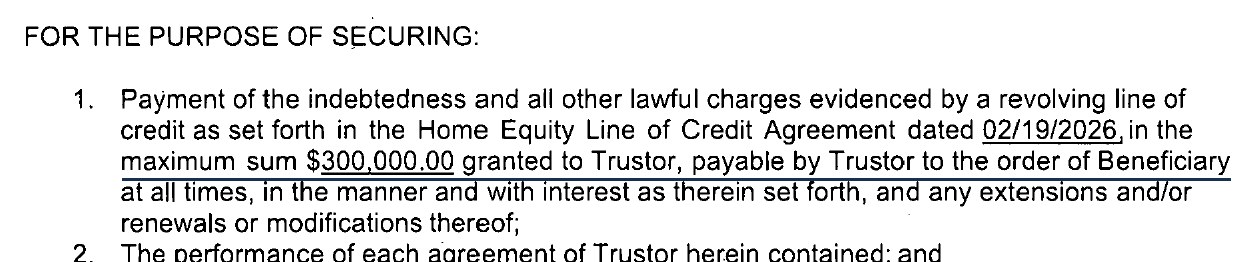
The instrument adds what the index does not say. The $300,000 is the ceiling of a revolving line, not a loan of that amount; how much was drawn, and for what, is not on the record. The deed’s covenant on liens contemplates “an existing first mortgage note.” Five days separate the line on the house, signed February 19, from the lien on the company, filed February 24.
The brothers’ income is pledged to BAM’s lawyers
On April 17, 2025, at 1:56 p.m. MDT, financing statement no. 2504171138883-7 was filed in Utah naming Ammon McNeff and Matthew McNeff as debtors and “DENTONS DURHAM JONES PINEGAR, P.C.” of Lehi as secured party. The collateral: “PAYMENTS AND/OR RECEIVABLES DUE AND PAYABLE TO DEBTORS BY DANIEL ("DAN") MCNEFF AND/OR LEGALLY MINE, LLC PURSUANT TO THAT CERTAIN 1/26/21 PROMISSORY NOTE (DULY EXECUTED BY DAN MCNEFF AND LEGALLY MINE).” That note is the $1,728,000 their father’s company agreed to pay them in the 2021 settlement of the family’s dispute over it, “a promissory note totaling $1,728,000.00 payable to the McNeffs” (The lenders; October 3).
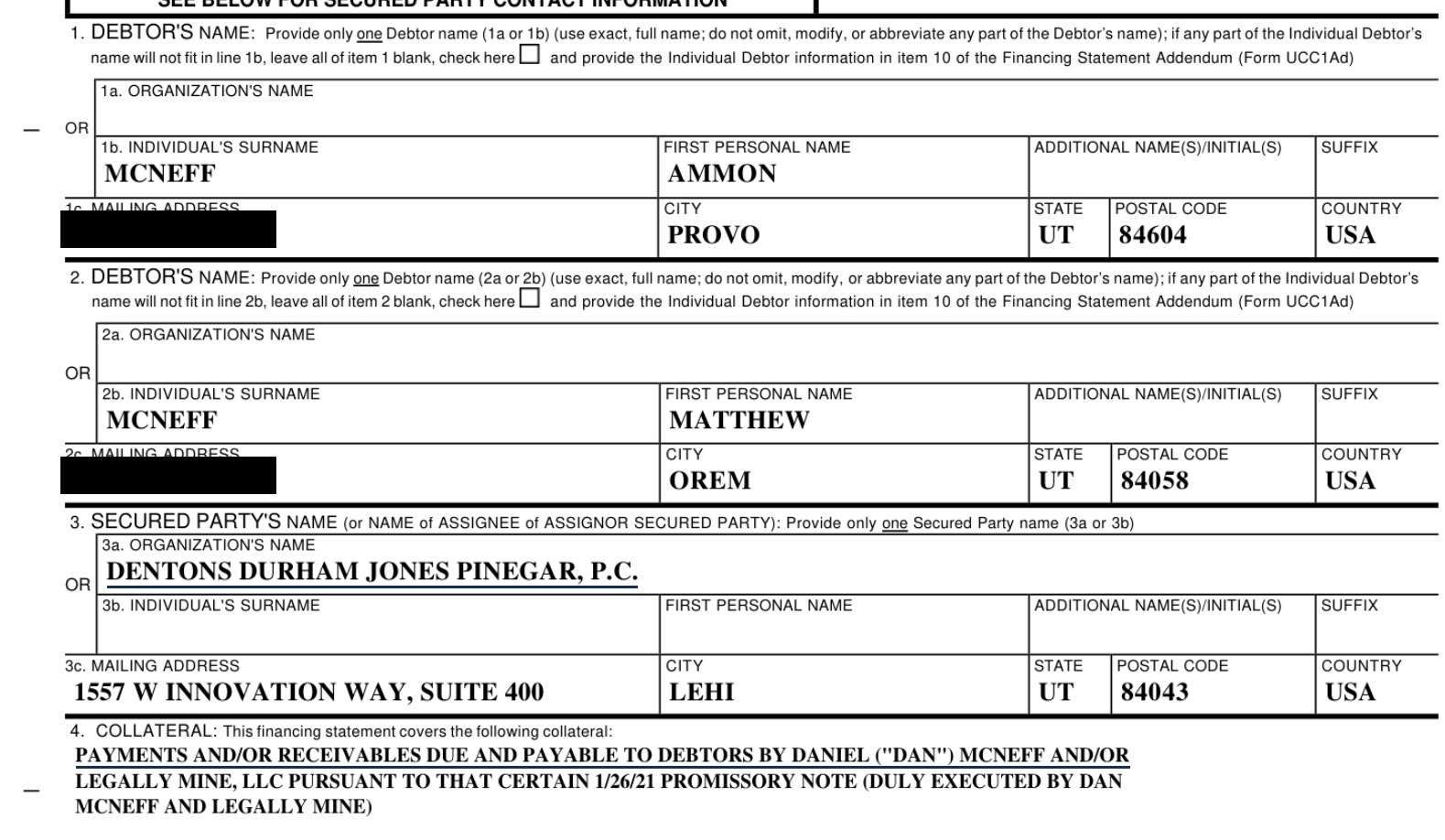
Fifteen days later, on May 2, 2025, the brothers’ former lawyer, Sumsion Business Law, sued them and Legally Mine in Provo over its fees (June 28). Dentons defends them there, filed BAM’s racketeering suit against Reckless Ben, and signs BAM’s state franchise filings (September 25). A financing statement records a security interest; it does not say what debt it secures, or how much.
The brothers’ own lien on Legally Mine for that note, financing statement no. 210216749881-3, Daniel McNeff and Legally Mine, LLC as debtors and Ammon and Matthew McNeff as secured parties, filed February 12, 2021 over a 21 percent membership interest and the firm’s computers, cash and receivables, reached its lapse date on February 13, 2026; the Division’s liens filing summary of June 2, 2026, served below, marks it “Lapsed.” Utah’s commercial code says of that day: “Upon lapse, a financing statement ceases to be effective and any security interest or agricultural lien that was perfected by the financing statement becomes unperfected, unless the security interest is perfected otherwise” (70A-9a-515). Fifteen weeks after that date, on May 29, 2026, the brothers’ verified answer in the Sumsion case, signed under criminal penalty, says they “assert senior, perfected security interests in monies due to them from Legally Mine.”
In order
Where this comes from
- The Delaware filings and certificate: the Division of Corporations’ UCC search, a paid service; the certificate’s authentication number can be checked at corp.delaware.gov/authver.shtml.
- The deed: Utah County Recorder, entry 15484:2026, on parcel 55:333:0014; pages 1, 2 and 8 are served, the street address and the notary’s residence line masked under this site’s rule for homes.
- The Utah financing statements: the Division of Corporations and Commercial Code’s UCC search at corporations.utah.gov, behind a Utah ID login. The 2021 filing is served as the Division printed it on October 15, 2026; the Division’s June 2, 2026 summary for Legally Mine, LLC and its information report for BAM Franchising, Inc. are served as issued, with the requester’s name and address masked. The June 2 export is also cited on The lenders.
- BAM’s disclosure documents: the September 2026 amendment as filed with the Minnesota Department of Commerce (file 9006, document 37254-202609-02; Exhibit H begins at page 296) and with Wisconsin; the April 8, 2026 edition as marked for Minnesota; the 2024 edition’s balance sheet at December 31, 2023.
- Sumsion Business Law v. McNeff, Utah Fourth District No. 250402162: the docket and the brothers’ verified answer, as served with June 28. Utah Code 70A-9a-317 and 70A-9a-515 as published by the Legislature. Vista Bank’s page for Hillcrest clients, read October 15, 2026.
The fair reading, and its limit. A bank line secured by a lien on everything a company owns is the ordinary form of small-business credit, nothing here says the line is in default or that any claimant holds a judgment, and a secured lender’s priority is the ordinary law of every bank loan. A home equity line is a common way for an owner to raise money, and the deed does not say what was drawn. The auditors’ note is their judgment of what a new facility after the year end required, and the September amendment printed the line. Lawyers may take security for their fees, and a lapsed financing statement does not by itself end a creditor’s claim; the statute’s own words leave room for a lien perfected another way. What the fair reading does not explain is the week: a $300,000 line on the chief executive’s house on February 19, a lien on everything the company owns on February 24, and a disclosure document certified in April that names no bank. The right of reply is open to BAM Franchising, Ammon McNeff, Vista Bank and Dentons Durham Jones Pinegar.
The record
The shells: the Provo home and the $300,000 deed of trust. The lenders: the $1,728,000 note and the 2021 lien. October 3: Legally Mine held two thirds of BAM’s shares. September 25: the September amendment, and where the marks went. July 2: going-concern distress on BAM’s own numbers. July 15: the franchisor’s legal home keeps moving. July 8: the address on the warrant is the chief executive’s house. June 28: one lawyer, both sides. October 5: the certification. The disclosure.
Sources. Delaware Department of State, Division of Corporations, UCC-1 no. 20261497433 filed February 24, 2026 with its addendum, and UCC-3 no. 20267142793 filed August 31, 2026, filing office copies; UCC-11 certificate no. 20269848913, authentication 205431508, dated October 15, 2026; all quoted verbatim. Utah County Recorder, entry 15484:2026, Deed of Trust to Secure Home Equity Line of Credit Agreement, recorded February 25, 2026, pages 1, 2 and 8 quoted verbatim, the street address masked. Utah Division of Corporations and Commercial Code, UCC-1 no. 2504171138883-7 filed April 17, 2025, quoted verbatim; UCC-1 no. 210216749881-3 filed February 12, 2021, with the Division’s summary and detail exports of June 2, 2026 for Legally Mine, LLC and for BAM Franchising, Inc. (JPMorgan Chase Bank, N.A., UCC-1 no. 2023970648-7, June 26, 2023). Delaware Division of Corporations, entity 2482543, status as retrieved June 16, 2026. BAM Franchising, Inc., Franchise Disclosure Document issued April 8, 2026 and as amended September 2026, Exhibit H, Minnesota file 9006 documents 36508-202605-07 and 37254-202609-02 and the Wisconsin copy of September 8, 2026: the balance sheet as of May 31, 2026, the profit and loss for January to May 2026, and the audited consolidated statements of financial condition at December 31, 2025 with Note 11, quoted verbatim; Items 1, 3 and 11 quoted verbatim; the March 31, 2024 edition, Exhibit H. Sumsion Business Law, LLC v. McNeff, Utah Fourth District No. 250402162, the docket and the Second Amended Verified Answer of May 29, 2026, as served June 28. Utah Code 70A-9a-515 and 70A-9a-317 (the latter effective May 6, 2026), as published by the Legislature, read October 15, 2026. National Bank Holdings Corporation, “Hillcrest Bank Expands into Utah,” company release of January 16, 2019. Vista Bank, the page Hillcrest Bank’s site redirects to, read October 15, 2026. Everyone named here is presumed to have acted lawfully; a lien is not a default, a filing is not a finding, and this page makes none.